 English
 عربى

Industry News
Home / News / Industry News / ducted extractor hood: Applications, Selection Criteria, and Practical Guidance

ducted extractor hood: Applications, Selection Criteria, and Practical Guidance
2026-10-21
Content
- 1 What a Ducted Extractor Hood Actually Does
- 2 Ducted vs. Ductless: What Changes in a Commercial Kitchen
- 3 Sizing the Hood and the Duct Run
- 4 Grease Capture, Fire Safety, and Cleaning
- 5 Purification and Odor Control After the Hood
- 6 Make-Up Air, Noise, and Energy Use
- 7 Installation Details That Matter
- 8 A Practical Maintenance Routine
- 9 Choosing a Ducted Extractor Hood for Your Kitchen
- 10 Common Questions We Hear
A ducted extractor hood is one of those pieces of equipment that quietly decides whether a commercial kitchen feels comfortable or chaotic. At the busiest service periods, it captures hot air, smoke, grease, and odors at the cooking line and sends them outdoors through ductwork. When the hood, duct run, fan, and replacement air work together, the kitchen stays clearer and the cooking team can focus on the food.
What a Ducted Extractor Hood Actually Does
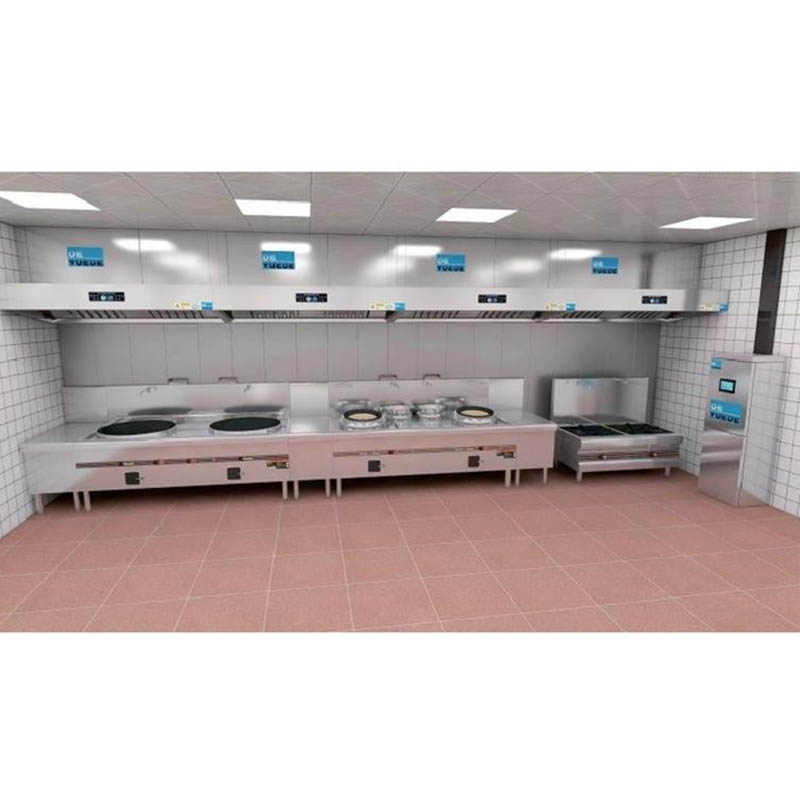
It is not simply a fan above a stove. A ducted extractor hood is a system. The canopy collects the rising plume, baffle filters trap much of the grease, and the duct carries the remaining air to a fan that discharges it outside. Make-up air replaces what leaves the room. If any part of that chain is undersized or poorly maintained, the hood loses capture and the kitchen starts to feel heavy.
In our experience, the most common mistake is treating the hood as a standalone purchase. The duct route, fan curve, discharge point, and fresh-air supply matter just as much as the canopy width.
- Canopy and filters capture grease and smoke at the source.
- Ductwork carries the exhaust without excessive pressure loss.
- The fan must match the actual static pressure of the installed system.
- Make-up air keeps the building from running under negative pressure.
Ducted vs. Ductless: What Changes in a Commercial Kitchen
Ductless or recirculating hoods filter and return air to the room. They can be useful in light-duty or retrofit situations where ducting is impossible, but they are not a direct substitute for a ducted commercial hood in a heavy grease environment. The table below summarizes the practical differences.
| Feature | Ducted extractor hood | Ductless / recirculating hood |
|---|---|---|
| Air path | Captures and exhausts outdoors through ductwork | Filters and recirculates air indoors |
| Grease and odor removal | Strong removal when filters and ducts are maintained | Limited; carbon filters need frequent replacement |
| Make-up air | Requires planned replacement air | Less exhaust, but room pressure still matters |
| Installation | Needs a duct route, discharge point, and fan access | Easier retrofit with no duct run |
| Best fit | High-output commercial kitchens | Light-duty or duct-constrained spaces |
Sizing the Hood and the Duct Run
Start with the cooking line, not the catalog. The hood should overlap the cooking equipment enough to catch the plume, especially at the front and ends. Mounting height matters too; set it too low and the workspace becomes cramped, too high and capture suffers. Our installation guide on hood height above the cooktop covers the practical range and safety points we check on site.
Then look at the duct. Every metre of straight run, every elbow, and every transition adds resistance. A fan chosen without calculating static pressure may sound powerful on paper but fail once the duct is installed. Keep the run as short and direct as the building allows, use smooth transitions, and provide access panels for cleaning. If the duct has to travel a long distance, the fan selection should follow the actual layout rather than a generic rule of thumb.
Grease Capture, Fire Safety, and Cleaning
Grease is the quiet risk in any extractor system. Baffle filters, grease trays, and accessible ductwork are not accessories; they are part of fire prevention. Filters should be easy to remove for daily or shift cleaning, and the duct should have enough access points for professional cleaning. Fire suppression nozzles and isolation switches must remain unobstructed. In commercial kitchens, a hood that is difficult to clean will eventually be cleaned less often, and that is where performance and safety both decline.
Purification and Odor Control After the Hood
Some kitchens need more than grease capture. Dense cooking, shared buildings, or sensitive neighbors may call for additional filtration, electrostatic precipitation, UV treatment, or odor control. A commercial kitchen ESP system can help reduce fine smoke particles before the air leaves the building, but it must be matched to the cooking load and maintained properly. Purification is not a substitute for a well-designed hood and duct run; it is an additional stage.
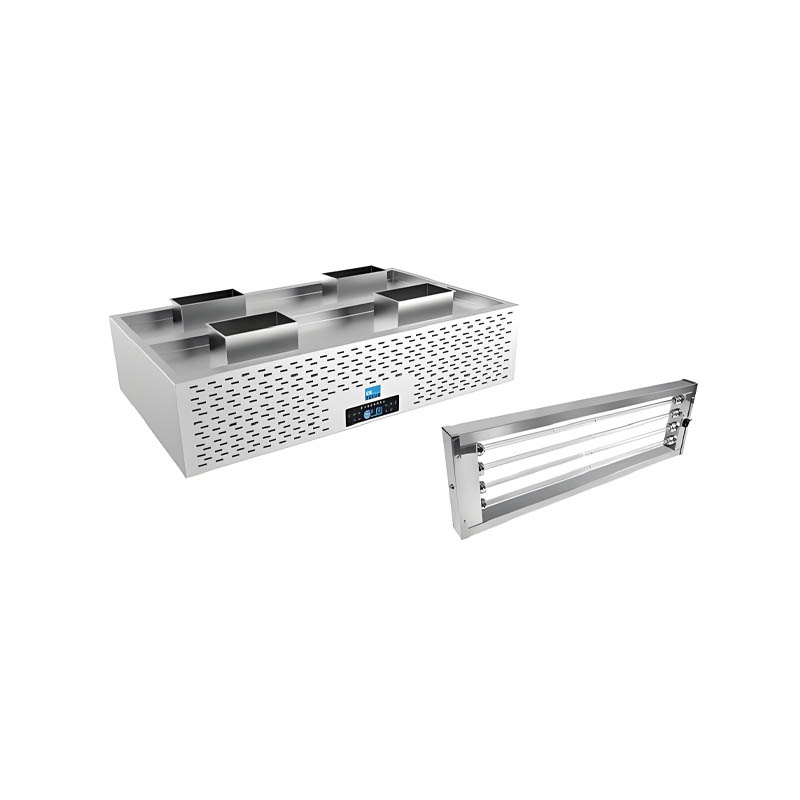
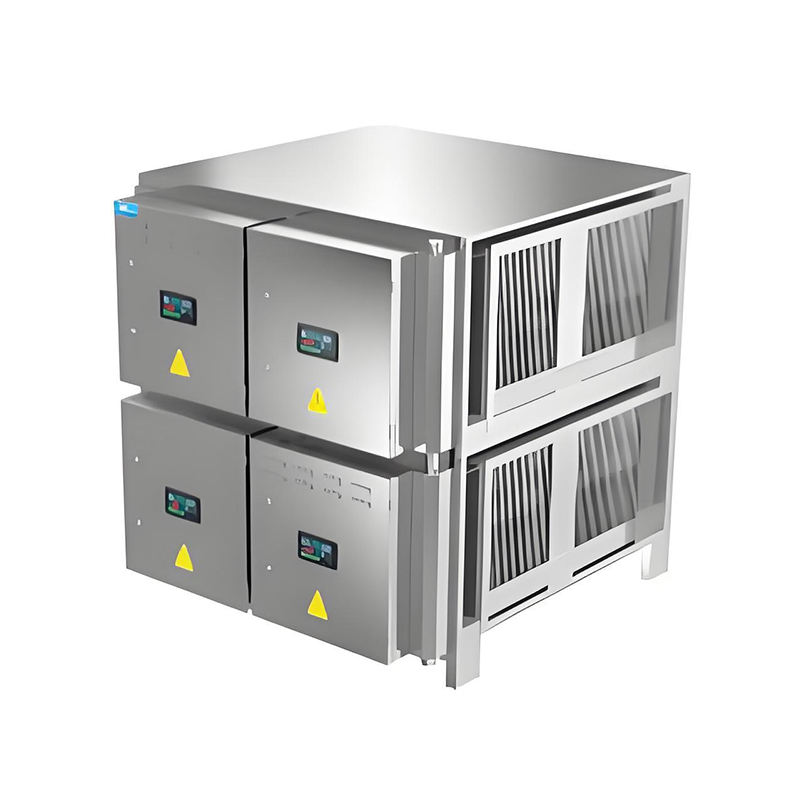 DY-X98 Commercial Kitchen Fume Purifier SeriesAdds electrostatic fume purification up to 98% for heavy commercial kitchens, with 4,000–42,000 m³/h models and built-in automatic cleaning.View Product →
Make-Up Air, Noise, and Energy Use
A powerful exhaust fan without replacement air will pull against closed doors, backdraft other flues, and make the kitchen feel draughty. Balanced make-up air keeps the hood working as intended and protects the building. Noise is closely related: an undersized duct or a fan running far from its best efficiency point often produces more sound and uses more energy. Demand-based controls, variable-air-volume operation, and intelligent smoke extraction can reduce wasted fan power when the kitchen is not at full load.
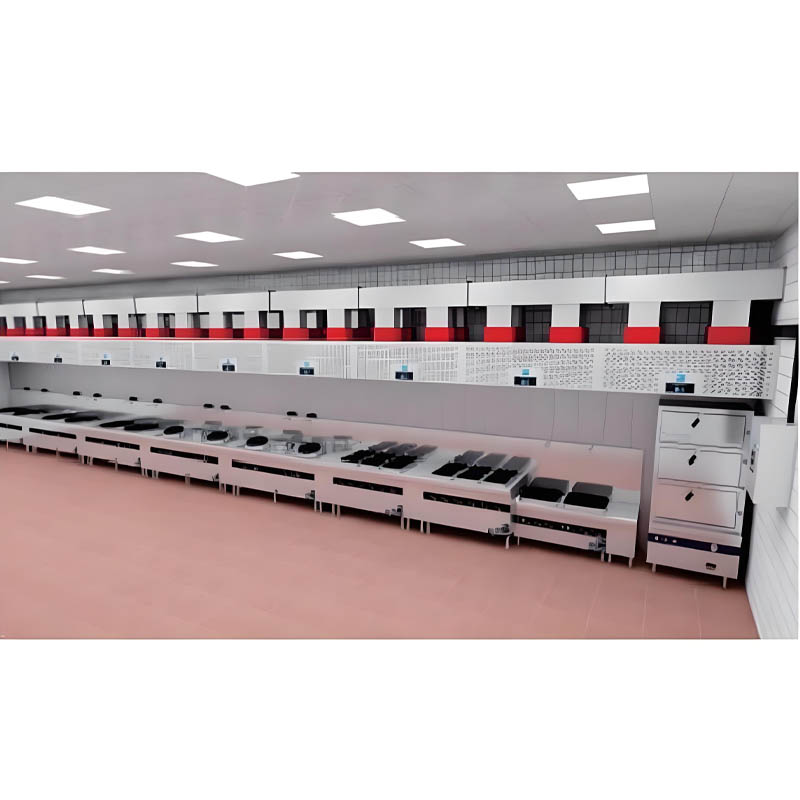 Wireless Intelligent Smoke Extraction SystemConnects wirelessly with intelligent energy-saving controls to distribute airflow, reduce fan load and noise, and simplify wiring in complex or renovation kitchens.View Product →
Installation Details That Matter
Good installation is mostly about access and discipline. The hood should be sealed and supported correctly, the duct should be properly jointed and insulated where needed, and the fan should sit on a stable base with vibration isolation. Discharge should point away from windows, intake vents, and neighboring properties. Electrical connections, fire suppression links, and control sensors need to be serviceable without dismantling the canopy. These details rarely look exciting, but they decide whether the system remains reliable after a year of heavy use.
A Practical Maintenance Routine
We usually recommend a simple routine: clean or exchange baffle filters at least daily in high-volume kitchens, empty grease trays before they overflow, inspect fan belts and bearings monthly, and schedule professional duct cleaning based on cooking volume and grease buildup. Automatic cleaning features can reduce manual effort, but they still need checks and scheduled service. A hood that is inspected regularly is easier to repair and safer to operate.
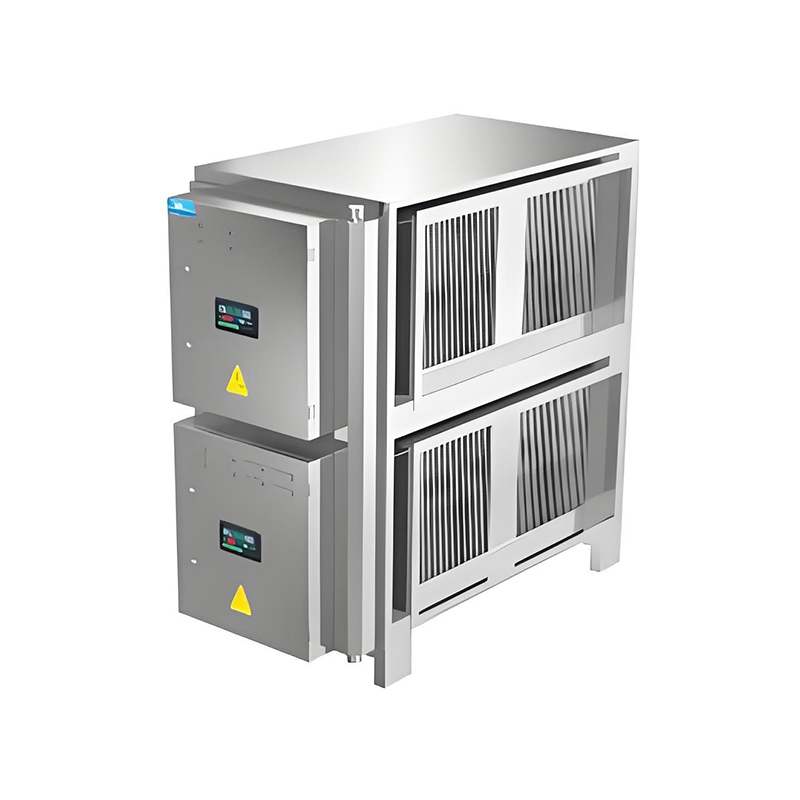
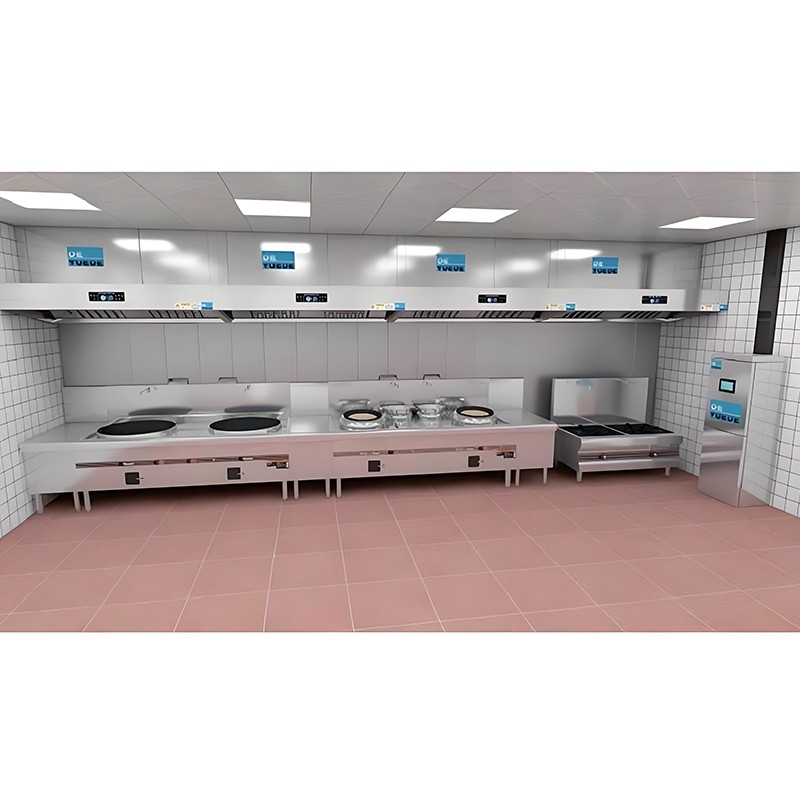 Dual-Module Intelligent Self-Cleaning Integrated SystemAutomates deep cleaning of capture and electrostatic modules without disassembly, supports up to six units, and reduces manual effort in heavy-duty kitchens.View Product →
Choosing a Ducted Extractor Hood for Your Kitchen
Before comparing models, write down the menu, cooking hours, equipment layout, building constraints, and local exhaust requirements. Then ask how the hood will be cleaned, where the duct will run, and what happens to replacement air. A ducted extractor hood that fits the cooking load and the building will always outperform a larger hood that was chosen without those checks. The goal is not the biggest fan on the roof; it is a balanced system that captures grease and smoke quietly, day after day.
Common Questions We Hear
Does a ducted extractor hood always need make-up air?
In most commercial kitchens, yes. The exhaust removes a large volume of air, and that air has to come from somewhere. Planned make-up air prevents negative pressure, backdrafts, and uncomfortable draughts.
How often should the ductwork be cleaned?
It depends on cooking volume and grease load. Heavy frying and grilling operations usually need more frequent inspections than light-duty kitchens. The important point is to schedule cleaning before grease buildup becomes a fire risk.
Can a ducted hood be installed on an interior wall?
It can, but the duct route becomes the deciding factor. An interior wall may require a longer run, more elbows, or a ceiling and roof penetration. The fan and duct size must be chosen for that real layout.
If you are planning a new kitchen or replacing an old extraction system, start with the cooking line and work outward. A well-matched ducted extractor hood, duct run, fan, and air supply will do more for comfort and safety than any single component on its own.
- No. 505 Lanshang Road, Xinwan Street, Qiantang New District, Hangzhou City, Zhejiang Province
- +86-(0)571-56682212
- [email protected]
Copyright @ Zhejiang Yuede Environmental Protection Technology Co., Ltd. All rights reserved Customized Commercial Kitchen Exhaust System Solution
