 English
 عربى
عربى
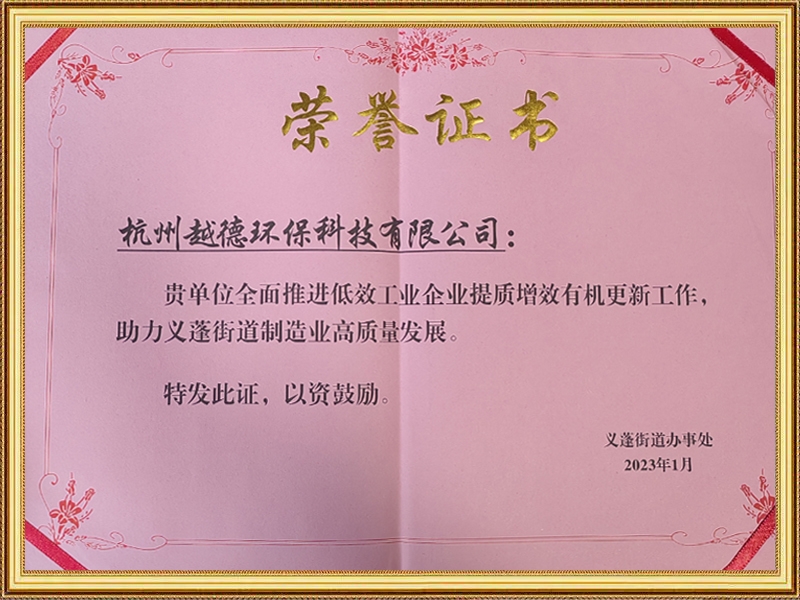
Zhejiang Yuede Environmental Protection Technology Co., Ltd. is located at 505 Lanshang Road, Xinwan Street, Qiantang District, Hangzhou City.
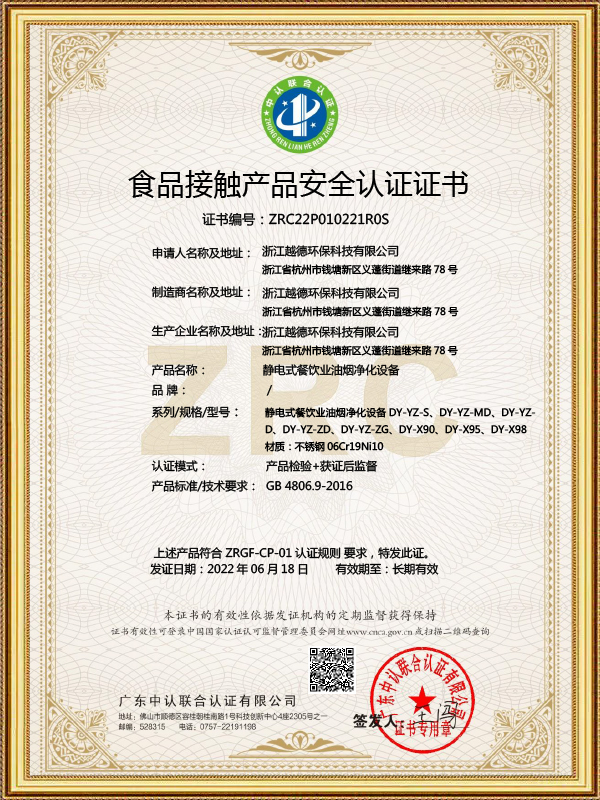
The company is mainly engaged in the research, development, production, and sales of oil fume purification and exhaust equipment, and is one of the few manufacturers in the industry with the ability to develop electronic software systems and design sheet metal structures.
The products specifically include oil fume purifiers, oil fume purification all-in-one machines, intelligent cleaning all-in-one machines, fans, fresh air cooling fans, and intelligent smoke exhaust systems.
Since 2020, the company has accumulated 2 invention patents and 31 utility model patents. Among them, the practical patent - the splicing technology of all-in-one machines has been adopted by more than 80% of peers; The patents related to intelligent cleaning and intelligent smoke exhaust systems are breakthrough or leading technologies in the industry. Traditional product companies such as oil fume purifiers and fans have optimized their structure and process to achieve better results and higher grades.

Products & Solutions
CONTACT US
-

+86-(0)571-56682212
-

-

No. 505 Lanshang Road, Xinwan Street, Qiantang New District, Hangzhou City, Zhejiang Province
Smoke Extraction Cabinet
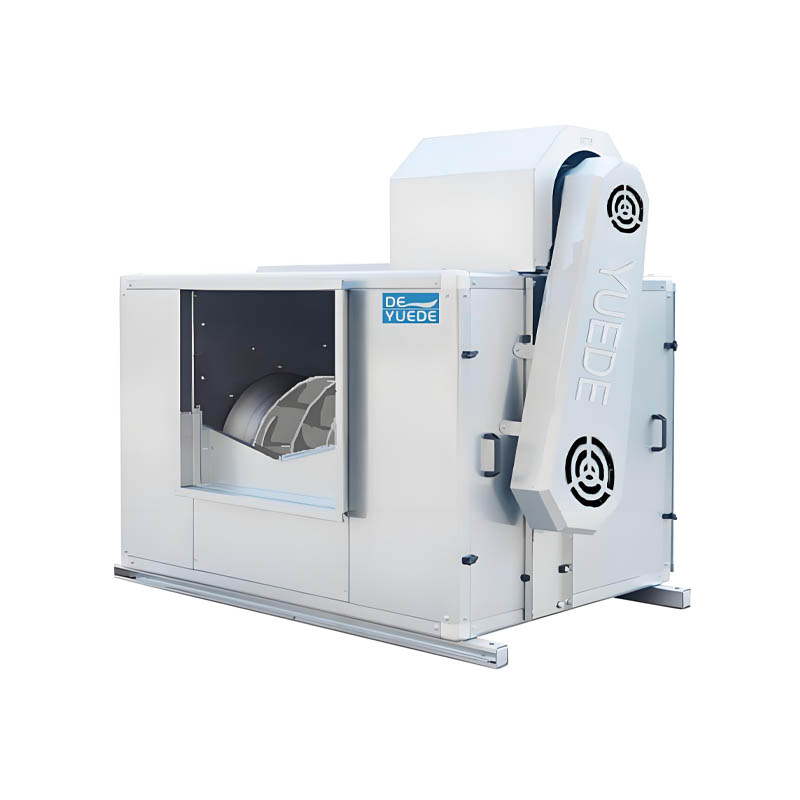
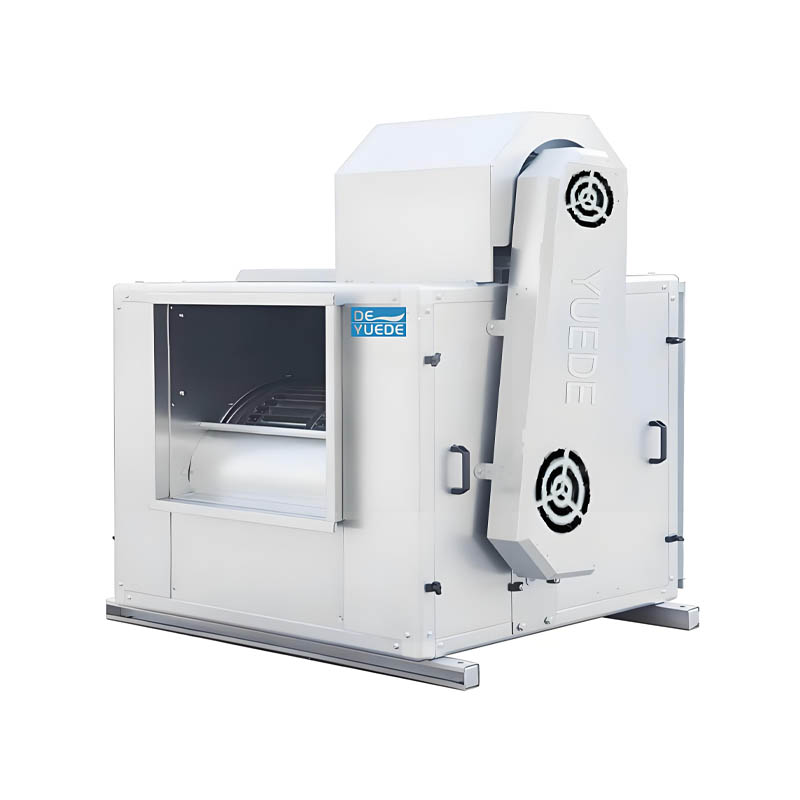
The fan housing is made of 1.5 mm galvanized steel sheet, providing excellent durability and corrosion resistance. The top and bottom panels, as well as the flanges, are formed from single sheets of metal to reduce joints and improve structural integrity. Sealant is applied to all corners, interfaces, and seams to ensure reliable airtightness.
The impeller adopts a multi-blade, double-inlet design and is manufactured from galvanized steel sheets with a powder-coated finish using precision tooling. After fabrication, the impeller is dynamically balanced on a dedicated balancing machine to ensure stable operation, low vibration, and reliable performance.
The unit is driven by a Y-series three-phase asynchronous motor rated at 380V / 50Hz. The motor offers high efficiency, energy savings, stable performance, low vibration, low noise, long service life, and easy maintenance. Its mounting dimensions and power ratings comply with IEC standards. The motor features Class B insulation, IP44 protection, and IC411 cooling.
The pulley system uses European-standard SPB pulleys, which provide high strength, low vibration, and stable power transmission for long-term reliable operation.
The bearings are Dongguan TR bearings, known for their excellent sealing performance, high precision, heat resistance, and long service life.
Fasteners are Grade 8.8 high-strength self-locking nuts, offering strong tensile performance, effective anti-loosening capability, and improved assembly reliability.
The motor support and base frame are made of galvanized channel steel and angle steel, providing excellent corrosion resistance and a long service life.
About Us
Zhejiang Yuede Environmental Protection Technology Co., Ltd.





Message Feedback
Smoke Extraction Cabinet Industry knowledge
Matching the Fan Curve to Duct Resistance Instead of Just Checking the CFM Number
At Zhejiang Yuede, we regularly encounter installations where a fan rated at the "right" CFM on paper still underperforms once connected to the actual duct run, and the reason almost always traces back to ignoring the static pressure curve. Every fan's rated airflow assumes a specific external static pressure; as duct length, elbow count, and filter resistance increase, the fan moves down its performance curve and delivers noticeably less airflow than the nameplate figure suggests. A fan rated for 3,000 CFM at 0.5 inches of static pressure might only deliver 2,200 CFM once installed against a duct system generating 1.2 inches of resistance from long runs and multiple 90-degree bends.
Before finalizing any Commercial Kitchen Exhaust Fan selection, it's worth calculating total system static pressure by adding up resistance from each duct section, elbow, filter bank, and termination point, then checking that figure against the fan's published curve — not just its peak rated CFM. Skipping this step is the single most common reason a newly installed fan still leaves visible smoke lingering near the hood face despite appearing correctly sized.
- Each 90-degree elbow typically adds resistance equivalent to 3–5 feet of straight duct
- A loaded grease filter bank can add 0.3–0.6 inches of static pressure compared to a freshly cleaned one
- Roof terminations with weather caps or bird screens add measurable resistance that's often left out of quick estimates
Why Belt-Drive Motor Placement Matters More Than Motor Horsepower
Motor failure in kitchen exhaust fans is rarely about insufficient horsepower — it's almost always about grease-laden, moisture-saturated air reaching windings that were never designed to tolerate it. In a belt-drive configuration, the motor sits outside the direct airstream and drives the wheel through a pulley and belt, which keeps grease vapor away from the motor housing entirely. Direct-drive units, by contrast, mount the motor shaft directly in the exhaust path, exposing bearings and windings to the same contaminated air the fan is removing.
This exposure difference explains why belt-drive units generally last longer in continuous heavy-duty service, even though they require occasional belt tension checks and eventual belt replacement — a far simpler maintenance task than a full motor rebuild. For a Restaurant Exhaust Fan running six or seven days a week over heavy fryer or wok lines, the reduced exposure of a belt-drive motor is why our lineup favors that configuration for continuous service, even though upfront cost runs slightly higher than a comparable direct-drive unit at Yuede.
| Drive Type | Motor Exposure to Exhaust Air | Typical Maintenance |
|---|---|---|
| Belt-drive | Motor outside airstream | Belt tension check, periodic belt replacement |
| Direct-drive | Motor shaft in airstream | Bearing wear monitoring, shorter service life in heavy grease |
Using Variable Frequency Drives to Cut Energy Use Without Losing Capture Performance
Running a kitchen exhaust fan at full speed continuously, regardless of whether the kitchen is in peak dinner service or sitting nearly idle mid-afternoon, wastes a substantial amount of electricity over a year of operation. A variable frequency drive lets the fan motor's speed scale down during low-demand periods, and because fan power consumption follows roughly the cube of speed, even a modest 20% speed reduction during slow periods can cut energy draw by close to 50% during those hours.
Practical considerations when adding VFD control
- Tie speed reduction to a temperature sensor at the appliance, not a fixed time-of-day schedule, since actual cooking load varies day to day
- Set a minimum speed floor to guarantee capture velocity never drops below the level needed for smoke containment
- Coordinate fan speed reduction with makeup air fan speed so the pressure balance discussed earlier isn't thrown off during low-speed operation
A Commercial Kitchen Smoke Extraction Fan paired with appliance-linked temperature sensing rather than a simple manual dial gives kitchens this energy savings automatically, without requiring staff to remember to adjust fan speed manually throughout the day.
Rooftop Curb Sealing and Backdraft Dampers Often Overlooked in Fan Installation
Even a well-selected, properly sized fan can underperform if the rooftop curb it sits on isn't sealed correctly, since gaps around the curb-to-roof junction let rainwater and outside air infiltrate the duct system, adding unplanned static pressure and, over time, corroding internal components. At Yuede we've seen units returned for "fan failure" that turned out to be a curb seal issue letting water pool inside the housing base, which eventually shorted the control wiring rather than any defect in the fan itself.
Backdraft dampers deserve equal attention: without one, a fan that's turned off can allow outside wind pressure to force air backward through the duct and into the kitchen, defeating the purpose of the exhaust system entirely during off hours. Gravity-actuated backdraft dampers are the simplest solution, but in high-wind rooftop locations a spring-assisted damper closes more reliably against sustained wind pressure than gravity alone can guarantee.
- Confirm curb sealant is rated for the roof membrane material, not a generic all-purpose sealant
- Inspect curb seals annually, since UV exposure degrades most sealants faster than the fan housing itself wears
- Choose spring-assisted backdraft dampers for rooftop locations with sustained high wind exposure
- No. 505 Lanshang Road, Xinwan Street, Qiantang New District, Hangzhou City, Zhejiang Province
- +86-(0)571-56682212
- [email protected]
Copyright @ Zhejiang Yuede Environmental Protection Technology Co., Ltd. All rights reserved Customized Commercial Kitchen Exhaust System Solution
