 English
 عربى
عربى
Industry News
Home / News / Industry News / Commercial Hood Fan Height Above Cooktop: Installation and Safety Guide

Commercial Hood Fan Height Above Cooktop: Installation and Safety Guide
2026-08-11
Content
- 1 The Short Answer: Hood Fan Height Above Cooktop
- 2 Why Hood Fan Height Above Cooktop Matters
- 3 Recommended Hood Heights by Cooking Equipment
- 4 Key Factors That Change the Ideal Hood Height
- 5 Signs the Hood Is Mounted at the Wrong Height
- 6 How to Verify the Correct Hood Height Before Installation
- 7 Hood Solutions That Make Height Work Harder
The Short Answer: Hood Fan Height Above Cooktop
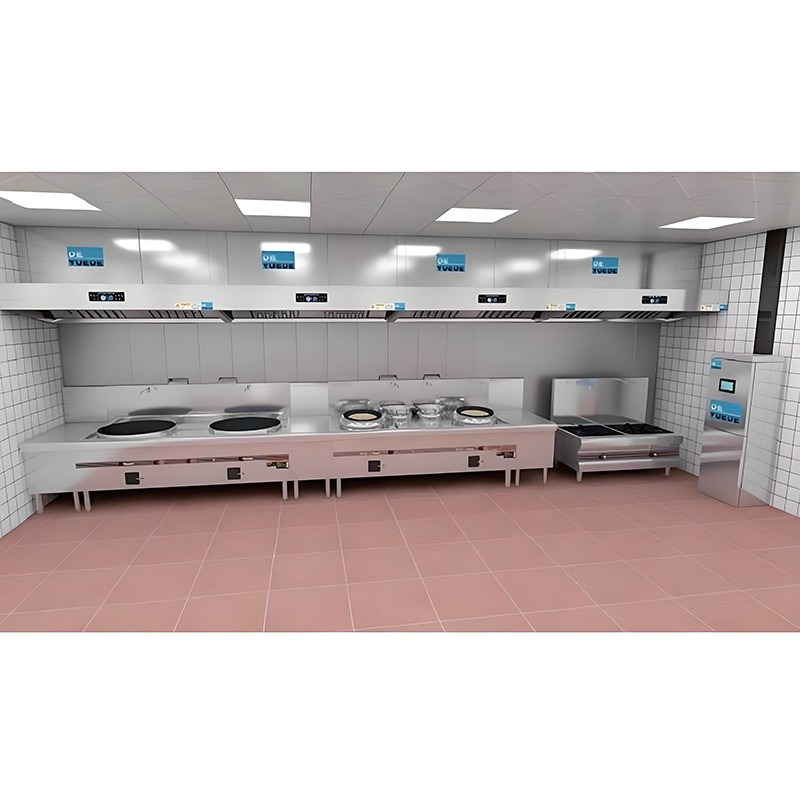
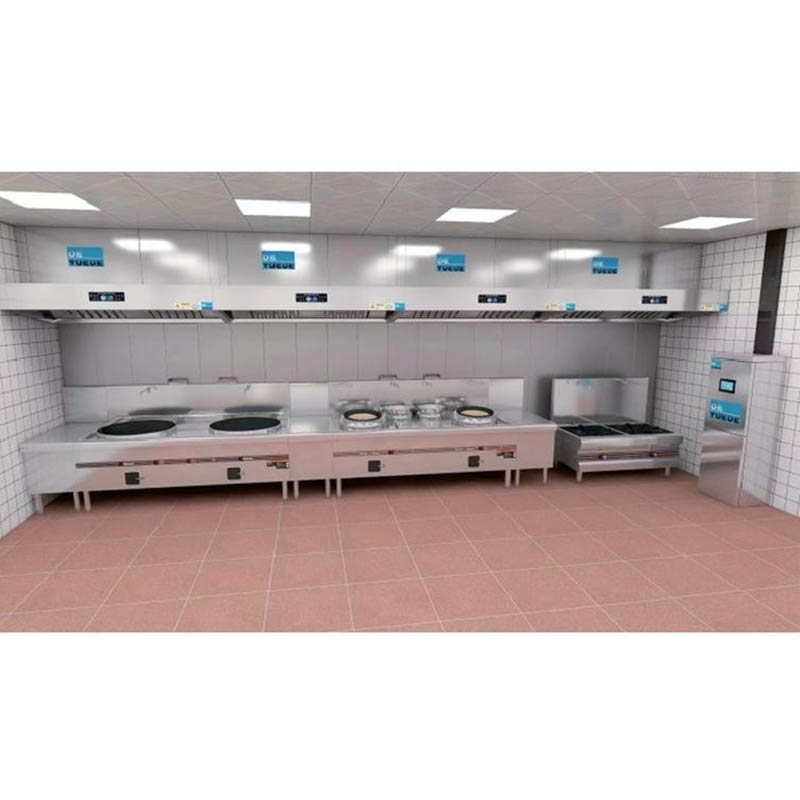
Most commercial kitchen cooking lines should be installed with a hood fan height above cooktop of 18 to 30 inches (46 to 76 cm), measured vertically from the cooking surface to the lowest edge of the hood or its grease filters. The most common working distance used by kitchen designers and installers is 24 inches for standard gas ranges and griddles. When the equipment produces intense radiant heat or a fast-rising plume, such as charbroilers, wok ranges, or oversized fryers, the hood should sit closer to the 18-inch end of the range. For lower-output equipment such as induction cooktops or electric griddles, the 30-inch end is usually acceptable.
This is not a one-size-fits-all number. The correct height depends on what is being cooked, how the hood is built, and which local codes apply. The sections below explain why the distance matters, how to adjust it for different equipment, and what happens when the hood sits outside the recommended range.
Why Hood Fan Height Above Cooktop Matters
The gap between the cooktop and the hood affects kitchen performance more than most procurement teams expect. It directly influences capture efficiency, safety, energy use, and the life of the exhaust fan.
Capture Efficiency Depends on Close Proximity
Heat and cooking fumes rise in a cone-shaped plume. As the plume moves upward, it expands, cools, and becomes easier for room drafts to push sideways. A hood mounted near the lower end of the recommended range catches the plume before it spreads. Raise the hood too far and the plume escapes at the front edge, allowing smoke, grease-laden air, and odors to enter the dining room or adjacent spaces.
Heat Exposure Shortens Fan and Hood Life
Mounting too low also creates problems. The fan motor, controls, and wiring can see temperatures well above their rating when the hood sits directly over high-output burners. Grease that lands on hot surfaces bakes into a hard film that is difficult to remove and can restrict airflow over time. The fan itself must also survive this environment; understanding what construction details make a smoke extraction cabinet fan durable helps avoid premature failures.
Energy Costs Are Tied to Mounting Height
When the hood is mounted too high, the exhaust system must move more air to compensate for lost capture. Higher airflow pulls more conditioned air out of the kitchen, raising make-up air and HVAC loads. Correctly mounting the hood closer to the cooktop allows the fan to run at a lower speed, which is why intelligent exhaust systems that cut kitchen energy costs also depend on a properly positioned hood.
Recommended Hood Heights by Cooking Equipment
Use the following table as a planning reference for commercial ranges, fryers, and specialty stations. Always verify with the hood manufacturer's installation manual and the Authority Having Jurisdiction (AHJ) before finalizing a kitchen layout.
| Equipment type | Recommended hood height above cooktop | Practical notes |
|---|---|---|
| Induction / electric griddles | 24-30 in (61-76 cm) | Lower heat plume and less radiant heat allow a more forgiving gap. |
| Standard gas ranges and ovens | 20-30 in (51-76 cm) | Most commercial hoods and exhaust fans are rated within this range at 24 in. |
| Deep fryers | 24-30 in (61-76 cm) | Steam mixes with vaporized oil; keep enough clearance for fire suppression coverage. |
| Charbroilers and wood-fired grills | 18-24 in (46-61 cm) | High radiant heat and strong convection require the shortest practical distance. |
| Wok ranges | 18-24 in (46-61 cm) | High-BTU burners create a fast plume; the hood and duct must also handle flame surges. |
| Pizza ovens and rotisserie | 24-36 in (61-91 cm) | Allow clearance for loading tools and taller product while maintaining capture around the opening. |
If the equipment line uses very different heights, the hood must be pitched or stepped so each section stays in its preferred range. A single flat hood angled away from the cooking surface will underperform on at least one station.
Key Factors That Change the Ideal Hood Height
Do not choose a mounting height based only on the cooktop brand or hood model. Consider these three variables together before supporting the duct.
Cooktop Heat Output and Plume Behavior
High-BTU gas burners release a fast, hot plume that holds its shape upward longer but spreads quickly when it hits the filters. Low-BTU induction surfaces generate less thermal lift, so a higher mounting gap can still allow smoke and steam to drift away. Matching the gap to the plume velocity is the single most effective adjustment an installer can make.
Hood Capture Area and Filter Design
The hood width and depth must overhang the cooktop enough to catch the expanded plume. A deeper hood can tolerate a slightly higher mounting position. Baffle filters direct grease into collection channels and work best when air enters at moderate velocity. If the gap is too large, the air slows before it reaches the baffles, and grease settles on duct surfaces instead of draining into the collection tray.
Code and Fire Suppression Clearances
In most jurisdictions, the hood height above cooktop must meet the clearance rules found in the hood's listing and in standards such as NFPA 96. Kitchen fire suppression nozzles also have maximum and minimum distances from the cooking surface. If the hood is moved for design reasons, the suppression system may no longer provide the coverage required for code compliance.
Signs the Hood Is Mounted at the Wrong Height
Operators often notice a height problem only after the kitchen is already in service. The most common symptoms of a hood mounted too low include staff striking their heads on the front lip, heat damage to lights and controls, and grease accumulating on the exterior panels. A hood mounted too high produces visible smoke rolling out at the front, a greasy film on nearby walls, and drafts across the cooking line even when the fan runs at full speed.
Both mistakes raise operating cost. In the first case, the fan partially re-circulates captured heat and shortens component life. In the second, the kitchen loses clean conditioned air because the exhaust fan works harder than necessary. Correcting the height after installation usually means relocating duct, which is far more expensive than setting the right distance at the design stage.
How to Verify the Correct Hood Height Before Installation
Measuring before the ductwork is hung is much cheaper than field adjustments later. Follow this procedure when laying out a commercial kitchen hood:
- Determine the finished height of each cooking equipment unit, including casters or adjustable feet.
- Select the hood model and confirm the position of its filtered bottom, not the overall cabinet height, as the reference point.
- Calculate the vertical gap at every station and adjust the hood pitch, riser, or mounting brackets so the lowest filter edge sits within the equipment-specific range.
- Check the hood's installation manual for heat clearance, fire suppression nozzle clearance, and fan motor orientation before ordering duct.
- After start-up, test for smoke roll-out with a smoke pencil or steam source at the worst station and adjust the exhaust fan speed.
If the hood location is fixed by a low ceiling, installers can sometimes raise the cooking line by using taller equipment stands. That adjustment is usually easier than relocating existing exhaust duct.
Hood Solutions That Make Height Work Harder
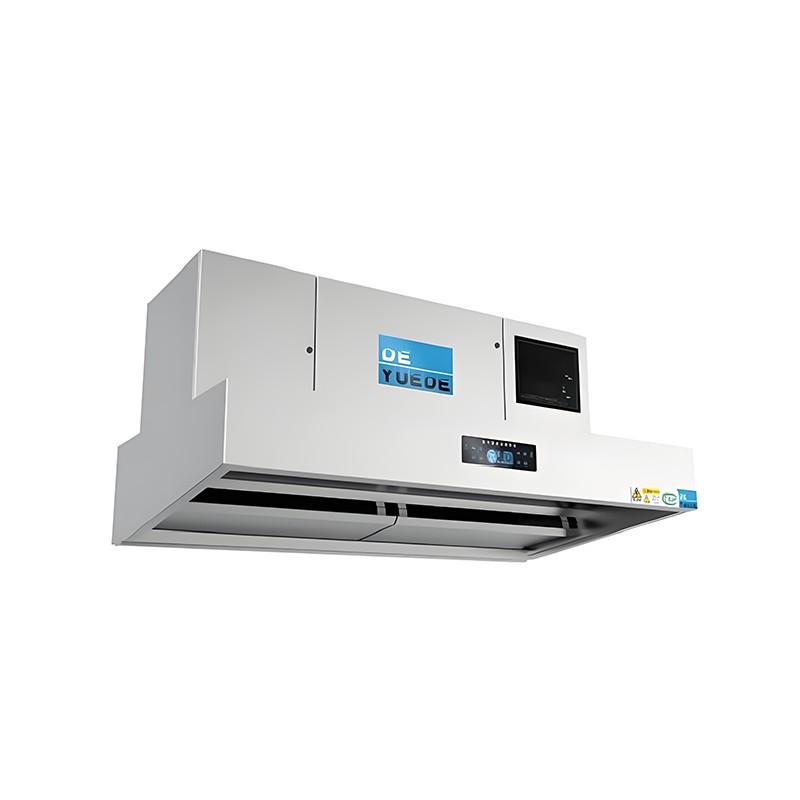
When the cooking equipment and ceiling leave little room for mounting flexibility, the hood itself must do more of the work. An integrated hood design keeps the capture zone tight while filtering contaminated air in one unit, which is the approach Yuede takes with its integrated commercial kitchen range hood with built-in purification. By combining the grease filter, fan, and purification stages inside the hood body, the system stays close enough to the cooktop to catch the plume before it escapes.
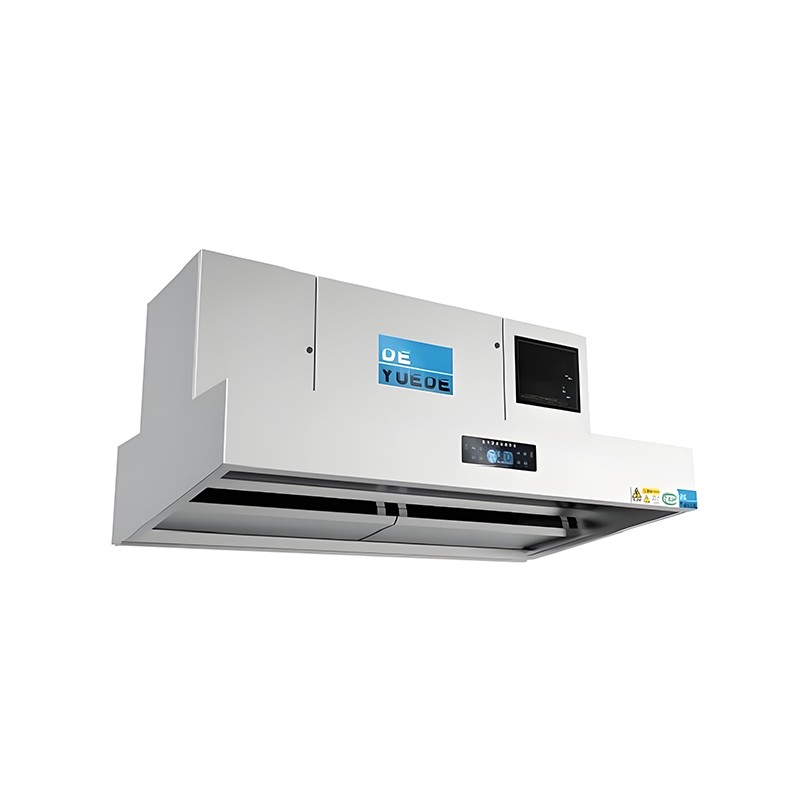 Flat Panel Integrated Hood Manufacturers, Flat Panel Kitchen Ventilation System Custom Flat Panel Kitchen Ventilation System Solution - Yuede is Flat Panel Integrated Hood Manufacturers and Commercial Kitchen Flat Pan...View Product →
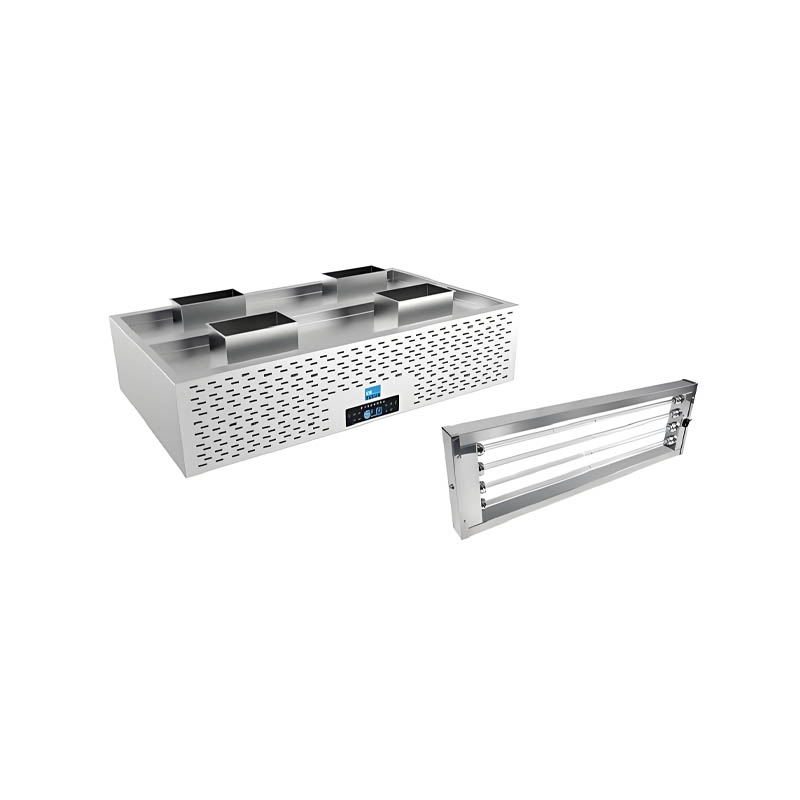
High-mounted hoods also create a maintenance problem: technicians cannot easily reach the filters. An dual-component intelligent cleaning integrated machine with smart cleaning controls shortens the manual cleaning cycle, which matters more when the hood sits higher or partly inside a false ceiling. Smart cleaning keeps the grease load under control without forcing kitchen staff to climb ladders during service hours.
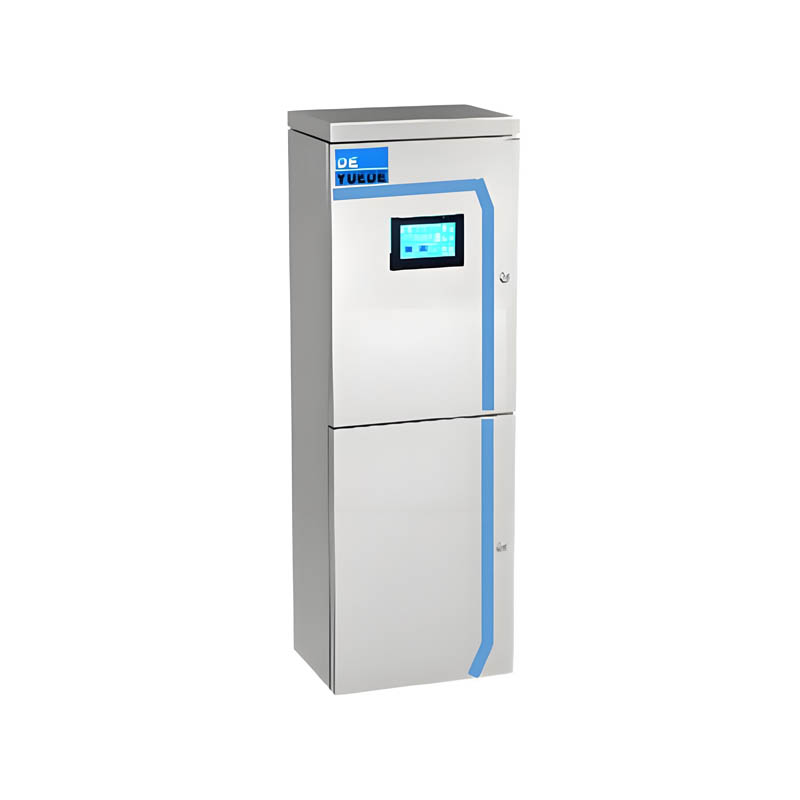 Dual-Unit Integrated Intelligent Cleaning System Suppliers, Factory - Zhejiang YZhejiang Yuede Environmental Protection Technology Co., Ltd. is Dual-Unit Integrated Intelligent Cleaning System Suppliers and Factory in...View Product →
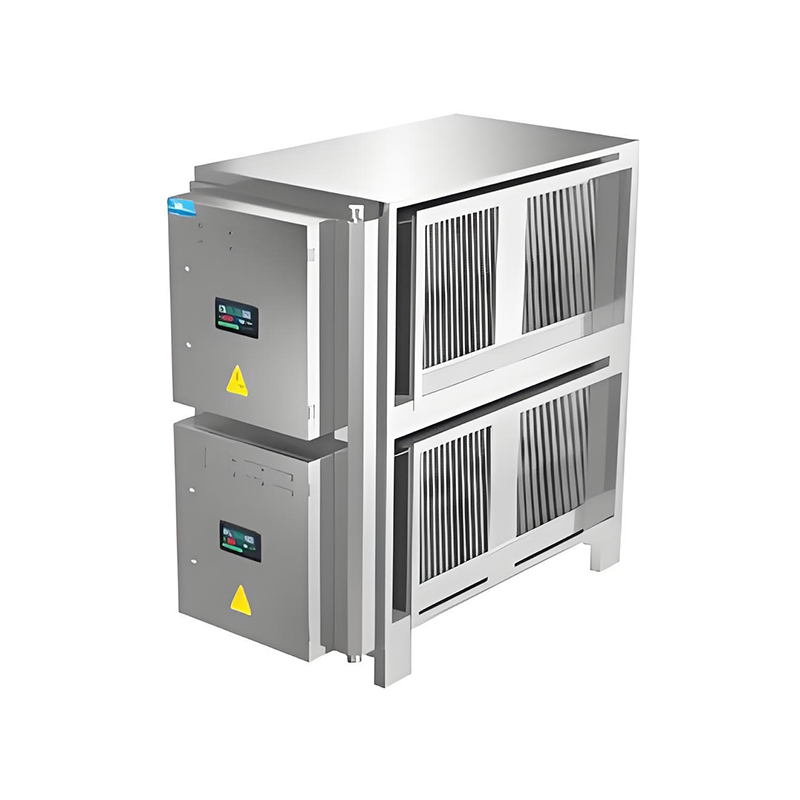
For kitchens where heavy charbroiler and grill loads force the hood close to the heat source, the exhaust air must still meet purification targets. A large-scale commercial kitchen fume purifier with 98% purification efficiency can sit downstream in the duct run, allowing the hood itself to stay low and compact while the heavy purification work happens away from the heat. System designers can see how a commercial kitchen fume purification system achieves 98% efficiency in practice and plan the hood gap around a complete ventilation package rather than a single fan rating.
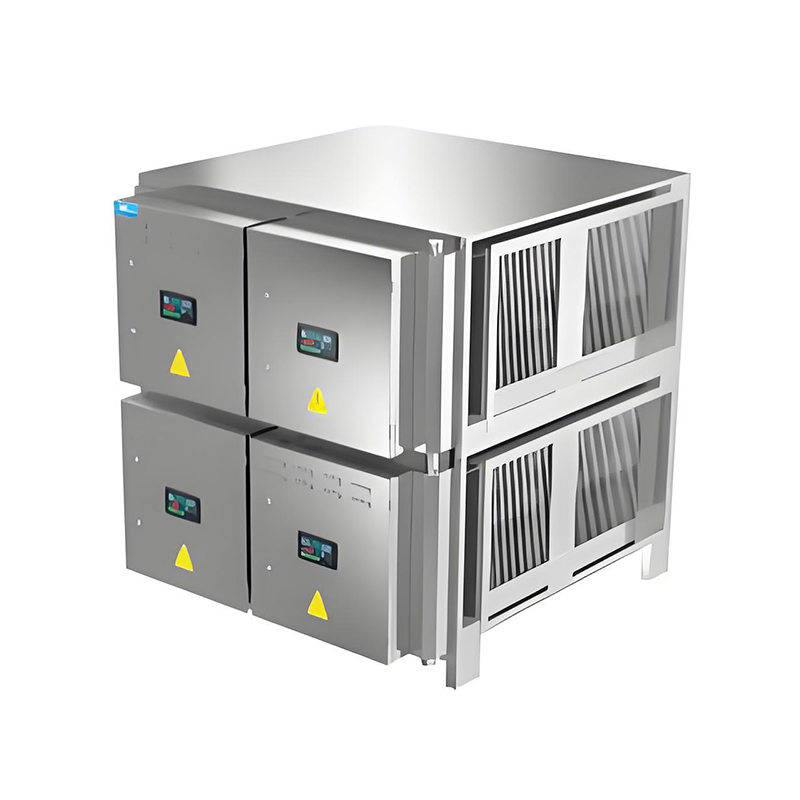 Commercial Kitchen Fume Purifier with Up to 98% Purification Efficiency SuppliZhejiang Yuede Environmental Protection Technology Co., Ltd. is Commercial Kitchen Fume Purifier with Up to 98% Purification Efficiency...View Product →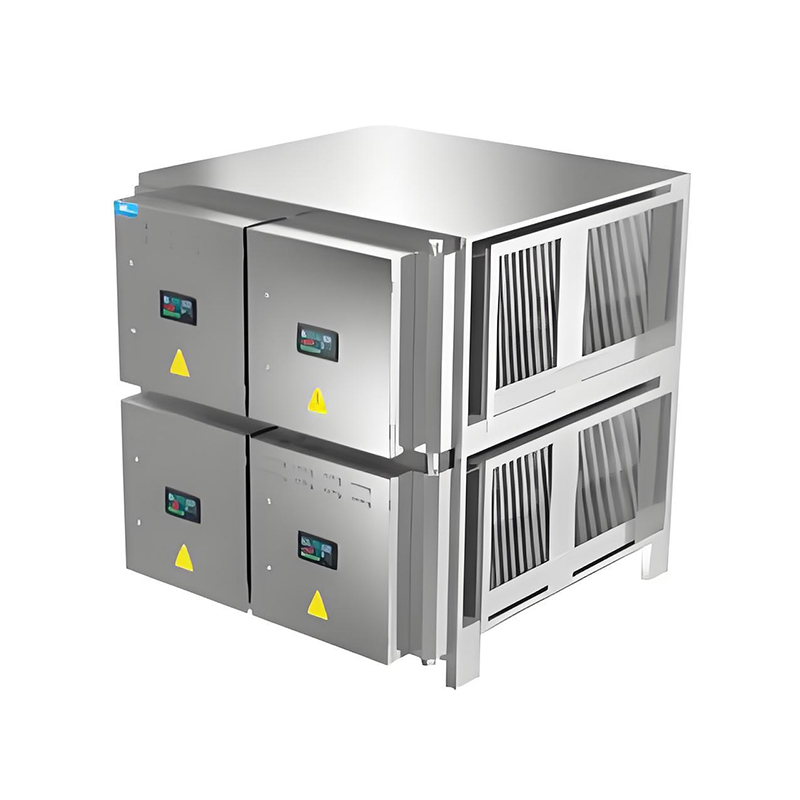
- No. 505 Lanshang Road, Xinwan Street, Qiantang New District, Hangzhou City, Zhejiang Province
- +86-(0)571-56682212
- [email protected]
Copyright @ Zhejiang Yuede Environmental Protection Technology Co., Ltd. All rights reserved Customized Commercial Kitchen Exhaust System Solution
