 English
 عربى

Industry News
Home / News / Industry News / Ductless Kitchen Ventilation: How Recirculating Systems Work in Commercial Kitchens

Ductless Kitchen Ventilation: How Recirculating Systems Work in Commercial Kitchens
2026-10-09
Content
- 1 What Ductless Really Describes
- 2 How Recirculating Kitchen Ventilation Works
- 3 Where Ductless Works, and Where It Does Not
- 4 The Numbers That Decide It: Airflow, Heat, and Moisture
- 5 Ducted and Ductless Side by Side
- 6 Maintenance Decides the Outcome
- 7 Retrofits, Leases, and Kitchens That Cannot Cut a Hole
- 8 Getting the Balance Right
Ductless kitchen ventilation divides people into two camps: those convinced that recirculating hoods are useless, and those who sell them without ever mentioning maintenance. Having spent years around commercial kitchen exhaust projects, we have watched ductless systems run quietly for a decade, and we have watched one turn a small cafe into a grease trap inside a year. The deciding factor is rarely the hardware. It is whether the recirculating path genuinely matches the way the kitchen cooks, and whether anyone cleans the filters.
What Ductless Really Describes
Ductless describes the air path, not the mounting style. A ducted hood draws cooking air through a filter and pushes it outdoors through ductwork and a roof or wall fan. A ductless, or recirculating, hood draws the same air, filters it in stages, and then returns it to the kitchen. Nothing leaves the building.
That single difference has practical consequences. There is no grease duct to route through the ceiling, no roof penetration to cut, no duct cleaning contract, and often no expensive make-up air rebalance. What it does not remove is the need to capture grease, move a serious volume of air, and deal with odor. Those requirements do not disappear just because the duct does.
It also helps to keep two similar terms apart. A convertible hood can run ducted or ductless depending on how it is configured. A hood that is genuinely designed for recirculation is engineered around filtration from the first sketch.
How Recirculating Kitchen Ventilation Works
Almost every commercial recirculating system works in three stages, and each stage removes a different kind of contaminant. Skip one and the others suffer.
Stage One: Capturing the Grease
Baffle filters, centrifugal separators, or a combination of both knock the bulk of the grease out of the airstream before it reaches anything delicate. Good first-stage capture removes the large majority of cooking grease and protects everything downstream. An overloaded or neglected first stage is the most common reason a recirculating hood starts to smell like the day it was installed.
Stage Two: Removing Smoke and Fine Particles
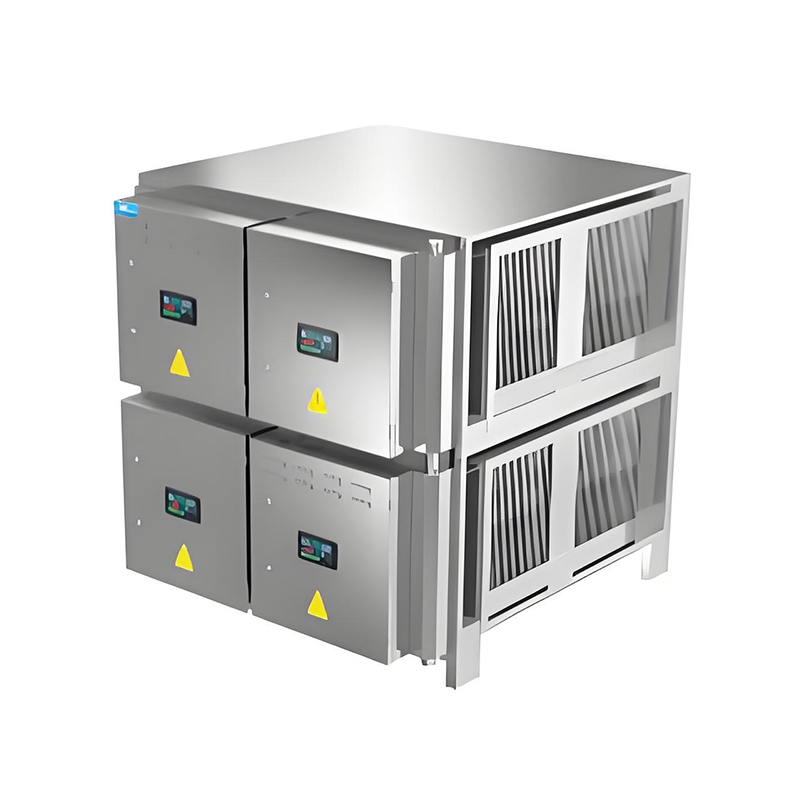
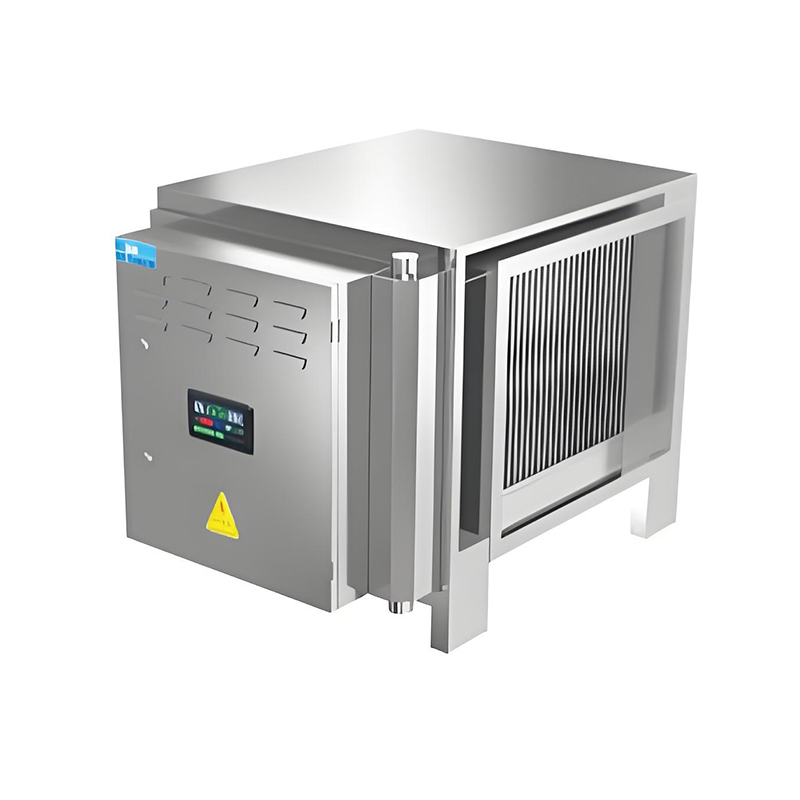
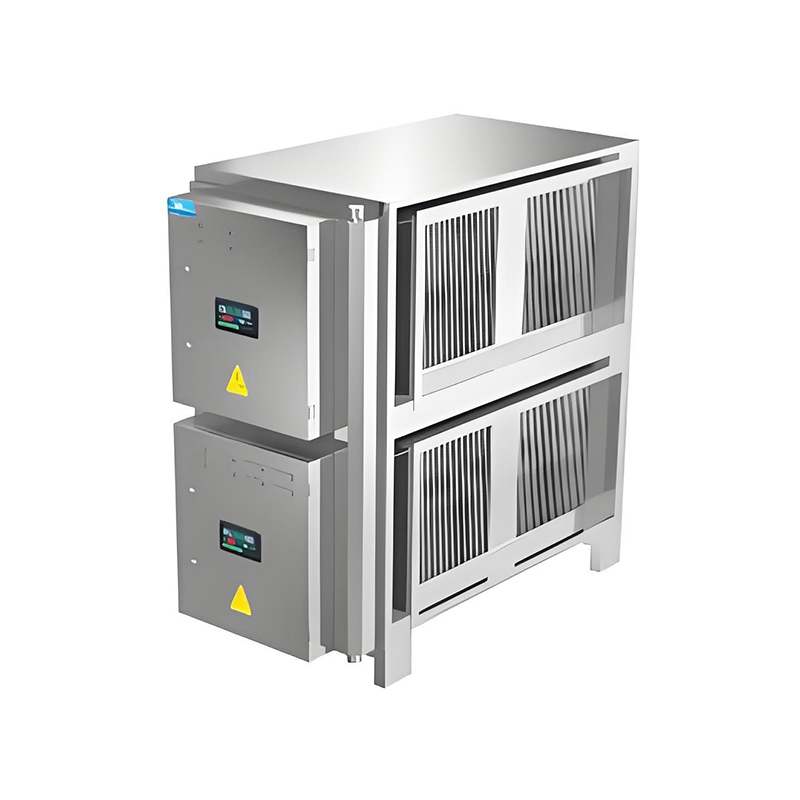
The particles that make a kitchen look hazy are far too small for a grease filter, which is where commercial kitchen ESP systems do their work. Charged plates attract the fine aerosol, and collection efficiency decides whether the air returning to the room looks clean or leaves a film on every surface. Efficiency is usually graded by application: roughly 85 percent for light-duty kitchens, 90 percent for hotel and canteen operations, 95 percent for heavy-duty cooking, and up to 98 percent for large-scale commercial kitchens with demanding loads.
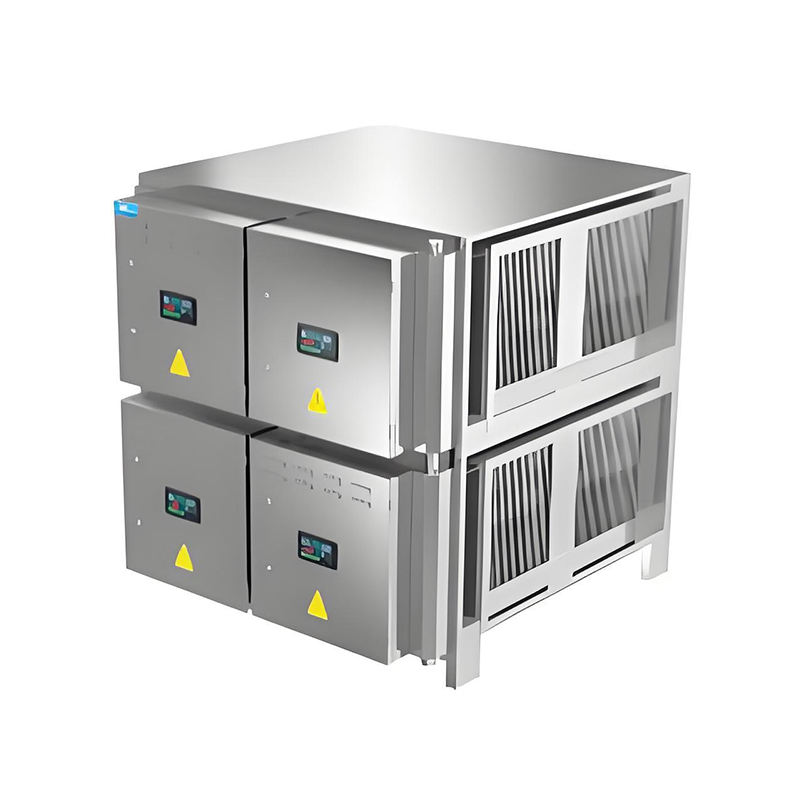 Commercial Kitchen Electrostatic Fume Purifier Up to 98% EfficiencyA high-capacity ESP purifier for hotels and canteens, with stainless steel housing, digital power supply and automatic cleaning for heavy cooking fumes.View Product →
Stage Three: Neutralizing Odor
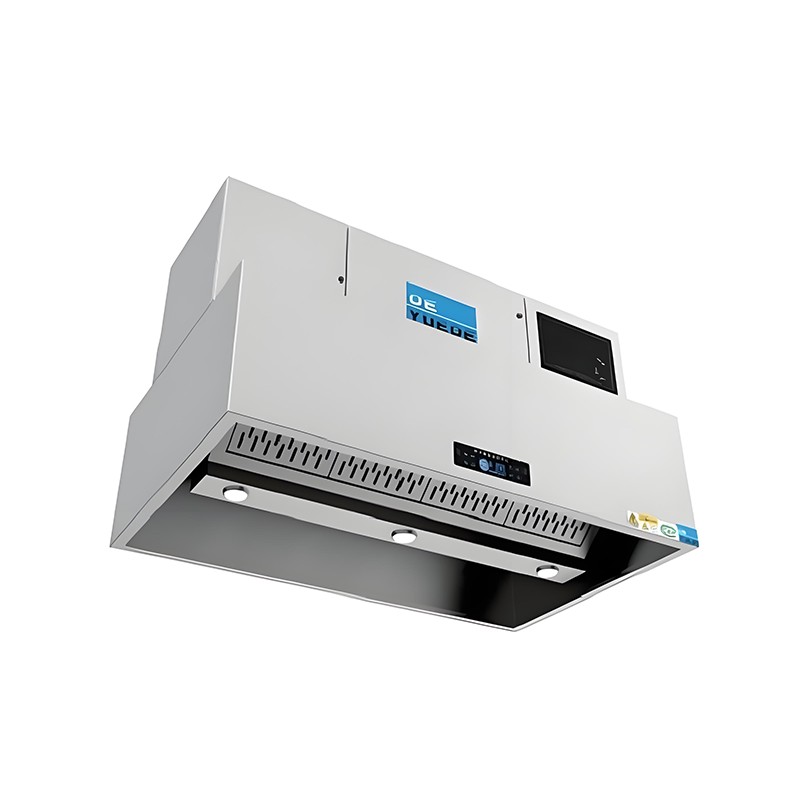
Filtration alone does not solve smell. Odor molecules are gases, not particles, and they pass straight through a mechanical filter. Two technologies handle them: ultraviolet photolysis, which breaks down grease vapor and odor compounds as the air passes the lamp, and activated carbon, which adsorbs what remains. The order matters. UV lamps hold their output for a long time but fade gradually, while carbon has a finite capacity and has to be replaced on schedule.
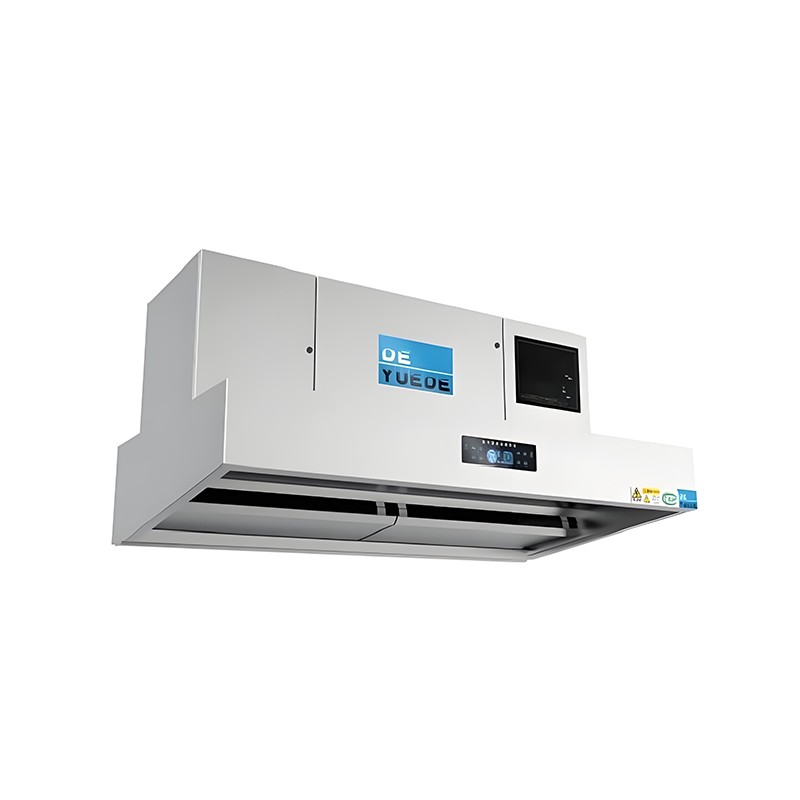
 Commercial Kitchen UV Range Hood with Integrated Air CurtainA 304 stainless steel hood combining grease capture, air curtain and UV photolysis for hotels, hospitals, restaurants and central kitchens.View Product →
Where Ductless Works, and Where It Does Not
A recirculating system fits when three conditions line up: the cooking load is light to moderate, the kitchen cannot easily exhaust outdoors, and somebody will maintain the filters. In practice that covers more situations than operators expect.
- Light and moderate cooking: griddles, ovens, sandwich presses, small induction or gas ranges, cafes, and staff canteens.
- Leased premises, listed buildings, or mall units where cutting a new roof penetration is not realistic.
- Island stations and open kitchens where the hood hangs in the middle of the room and has to stay there.
- Retrofits where the existing exhaust shaft is undersized or shared with other tenants.
- Pop-ups and temporary kitchens that need ventilation now and flexibility later.
The same logic rules other kitchens out, and it is worth being blunt about them.
- Solid-fuel cooking: charcoal, wood, and tandoor ovens produce smoke and embers that no recirculating filter is designed to handle.
- Heavy-duty wok ranges and charbroilers running through a full service.
- Operations where deep-frying byproducts and strong spice aromas dominate.
- Very large kitchens where the heat and moisture returned to the room would overwhelm the cooling system.
- Anywhere local code or the authority having jurisdiction requires outdoor exhaust. No product gets around that.
The Numbers That Decide It: Airflow, Heat, and Moisture
Two quantities usually settle the ducted versus ductless question before anybody starts comparing models.
The first is airflow, measured in CFM. A recirculating hood still has to develop enough capture velocity at the cooking surface to pull the plume in before it escapes into the room. Undersized airflow is the most common reason a recirculating kitchen ventilation system fails in practice, and no filter stage can compensate for air that never enters the hood.
The second is the load returned to the space. A ducted hood throws heat, moisture, and vapor outdoors; a ductless system puts most of that air back into the kitchen. In a small room with light cooking, that is barely noticeable. In a busy kitchen in summer, it can add meaningfully to the cooling load and raise humidity, which is why recirculating systems generally belong in smaller or lighter-duty spaces, or in kitchens with enough volume and air handling capacity to absorb it.
Standards matter here too. In North America, recirculating commercial hoods are addressed by UL 710 and by ventilation guidance such as ASHRAE Standard 154. A listed, correctly rated hood with a tested filtration package is a very different object from a residential-style recirculating hood hung over a commercial range.
Ducted and Ductless Side by Side
| Consideration | Ducted | Ductless (Recirculating) |
|---|---|---|
| Ductwork | Required and sized to airflow | None |
| Where the air goes | Outdoors | Back into the kitchen |
| Grease removal | Baffle or centrifugal filters | Baffle or centrifugal filters, often multi-stage |
| Smoke and fine particles | Carried out with the exhaust | Removed by electrostatic precipitation |
| Odor control | Diluted outdoors | UV photolysis plus activated carbon |
| Heat and moisture | Rejected outside | Returned to the room |
| Structural work | Roof or wall penetration, curbs, fans | Typically none |
| Typical best fit | Heavy-duty and high-volume kitchens | Light to moderate loads, retrofit, leased space |
Maintenance Decides the Outcome
Every recirculating system lives or dies on a cleaning schedule. In practice that means baffle filters cleaned daily to weekly depending on volume, electrostatic cells washed every two to eight weeks, and carbon replaced on the manufacturer's interval rather than when the smell returns. When a ductless hood underperforms, the cause is almost always a saturated filter rather than a design flaw.
That maintenance burden is also why self-cleaning designs have become popular. A hood that washes its own internals on a programmed cycle removes the variable that ruins most recirculating installations: human memory. It keeps collection efficiency closer to its rated figure for longer and makes the cleaning log something a manager can actually verify.
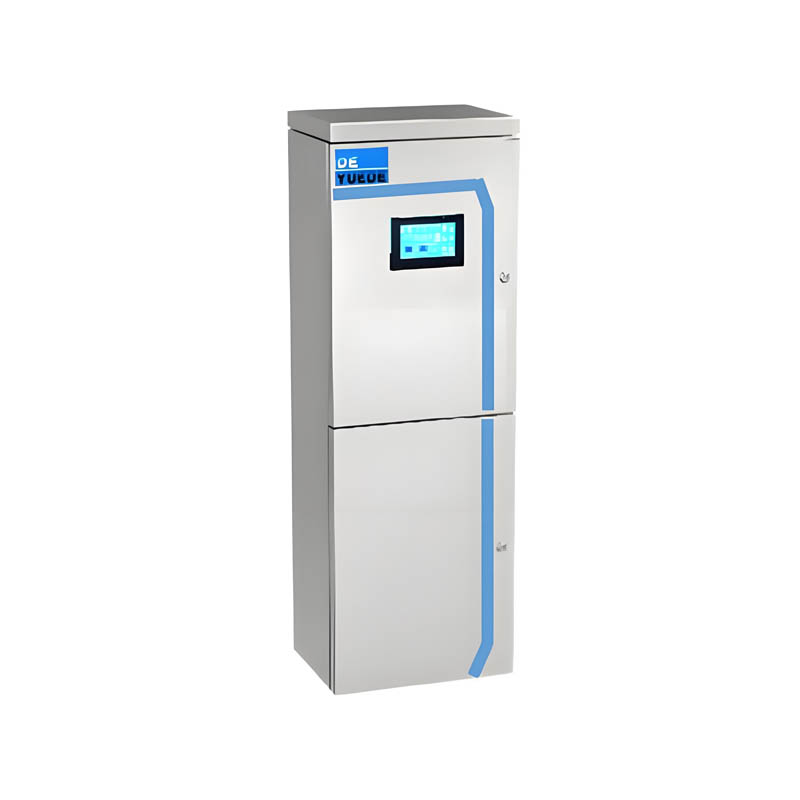 Dual-Unit Integrated Intelligent Cleaning System for Kitchen Exhaust HoodsAn automatic cleaning control cabinet that can service up to six integrated hood units, reducing manual cleaning to roughly once every one to three months.View Product →
Retrofits, Leases, and Kitchens That Cannot Cut a Hole
Most ductless projects are not new builds. They are tenants in a mall unit with no available shaft, operators in a leased building who cannot touch the roof, and kitchens where a listed historic facade makes a new penetration unthinkable. In those cases, a recirculating hood is not a compromise so much as the only option that keeps the kitchen open, provided the cooking load is honest about what it is. If you want a closer walkthrough of how these systems are configured and where they belong, our ductless range hood vent guide covers the practical side in more detail.
Getting the Balance Right
Ductless kitchen ventilation is neither a miracle nor a gimmick. It is a filtration problem with a heat and moisture side effect, and it works well when the cooking load, the airflow, and the maintenance routine are all matched to each other. Decide first what the kitchen actually cooks, then how many CFM the hood can develop, then who will clean it. If all three answers line up, a recirculating system can serve a commercial kitchen reliably for years. If any one of them does not, ductwork is worth the trouble.
- No. 505 Lanshang Road, Xinwan Street, Qiantang New District, Hangzhou City, Zhejiang Province
- +86-(0)571-56682212
- [email protected]
Copyright @ Zhejiang Yuede Environmental Protection Technology Co., Ltd. All rights reserved Customized Commercial Kitchen Exhaust System Solution
