 English
 عربى

Industry News
Home / News / Industry News / Chinese Range Hood Guide for Commercial Kitchens: CFM, Filters & Cleaning

Chinese Range Hood Guide for Commercial Kitchens: CFM, Filters & Cleaning
2026-09-30
Content
- 1 Why Chinese Cooking Demands a Different Range Hood
- 2 Specifications That Matter for a Chinese Range Hood
- 3 Common Types of Chinese Range Hoods
- 4 Filtration: Baffle Filters Versus Electrostatic Precipitators
- 5 Ducting, Fans, and Makeup Air
- 6 Smart Cleaning and Energy Control
- 7 A Practical Maintenance Routine
- 8 Frequently Asked Questions
Chinese cooking is fast, hot, and oily. A single wok burner can push tens of thousands of BTU, and the moment a chef slides food into a smoking wok, the kitchen air fills with a fine mist of oil droplets that finds every cool surface in the room. That is why a Chinese range hood is judged less by its finish and more by what it removes in the first thirty seconds of a stir-fry.
In commercial kitchens, the question is rarely "does the hood look good" but "will it keep the air clean, keep the fire suppression system happy, and keep the neighbors from complaining." This guide walks through the engineering decisions that actually matter, from airflow and capture width to filtration, ducting, and cleaning.
Why Chinese Cooking Demands a Different Range Hood
Home-style and Western cooking generate smoke in bursts. Wok cooking generates it continuously, at high temperature, with a plume that spreads wide and rises fast. Several characteristics set Chinese cooking apart:
- Extreme heat: wok burners reach far higher temperatures than domestic ranges, so the thermal plume rises faster and carries more grease vapor.
- Wide plume: chefs move the wok around the burner, so the plume is broader than a single-pan footprint.
- Fine aerosol: oil breaks into very small droplets that are harder to capture than chunky grease.
- High grease volume: repeated stir-frying deposits far more grease inside ducts and on fan blades.
- Strong odors: chili, garlic, fermented pastes, and spices produce odor compounds that linger in dining areas.
Those five factors explain why a hood that performs well in a home kitchen can struggle badly in a Chinese restaurant, and why sizing for the worst-case hour of the dinner rush is the only safe approach.
Specifications That Matter for a Chinese Range Hood
The table below summarizes the parameters worth comparing when you evaluate hoods and complete ventilation systems. Treat the numbers as starting points, and always confirm with your mechanical designer and local code.
| Specification | Why It Matters | Typical Commercial Target |
|---|---|---|
| Airflow / CFM | Drives capture of fast, wide plumes | Scaled to hood length and cooking load |
| Capture width | Must extend beyond the wok edge | Overhang on all open sides |
| Filter type | Determines grease removal and fire risk | Baffle or baffle plus ESP stages |
| Grease capacity | Fewer cleanings during service | Large-slope baffles and collection cups |
| Duct static pressure | Keeps airflow despite long runs | Fan curve matched to the duct layout |
| Material and build | Survives daily heat and washing | Heavy-gauge stainless steel |
| Cleaning method | Controls labor and long-term performance | Manual, automatic washing, or self-cleaning |
Common Types of Chinese Range Hoods
Wall-Mounted and Island Canopies
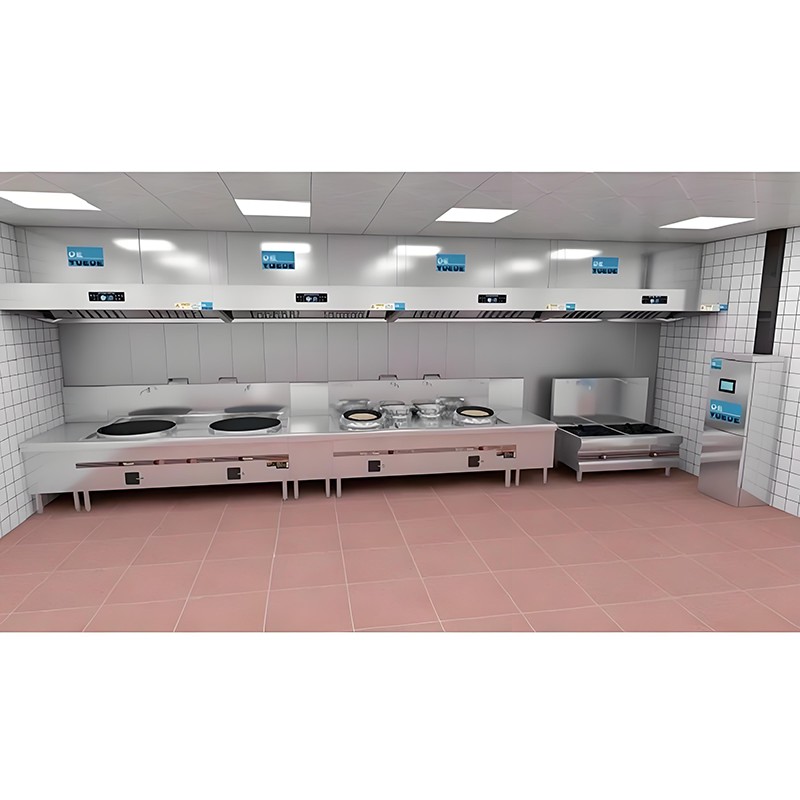
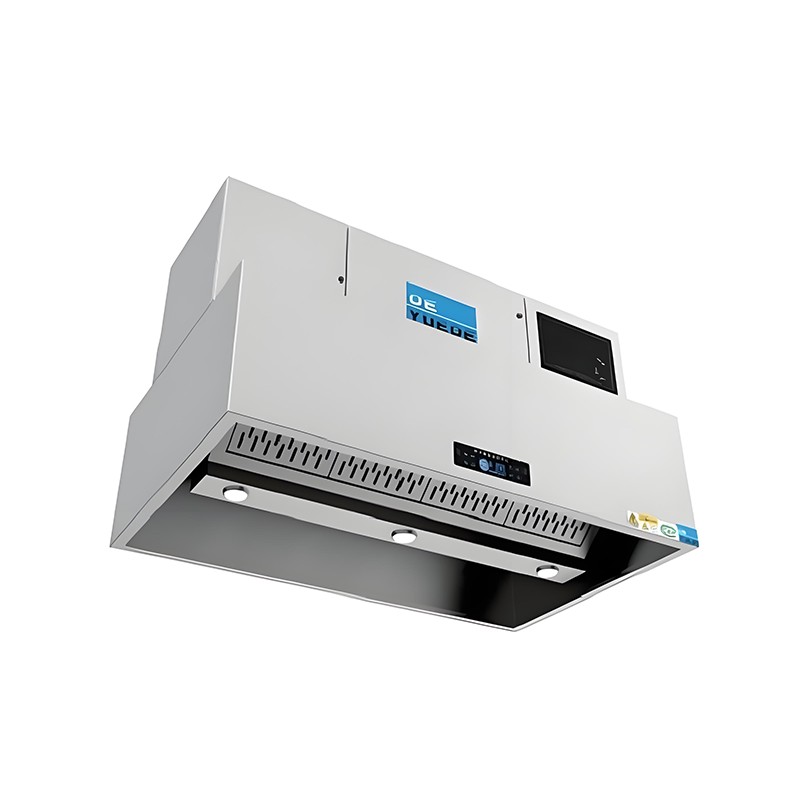
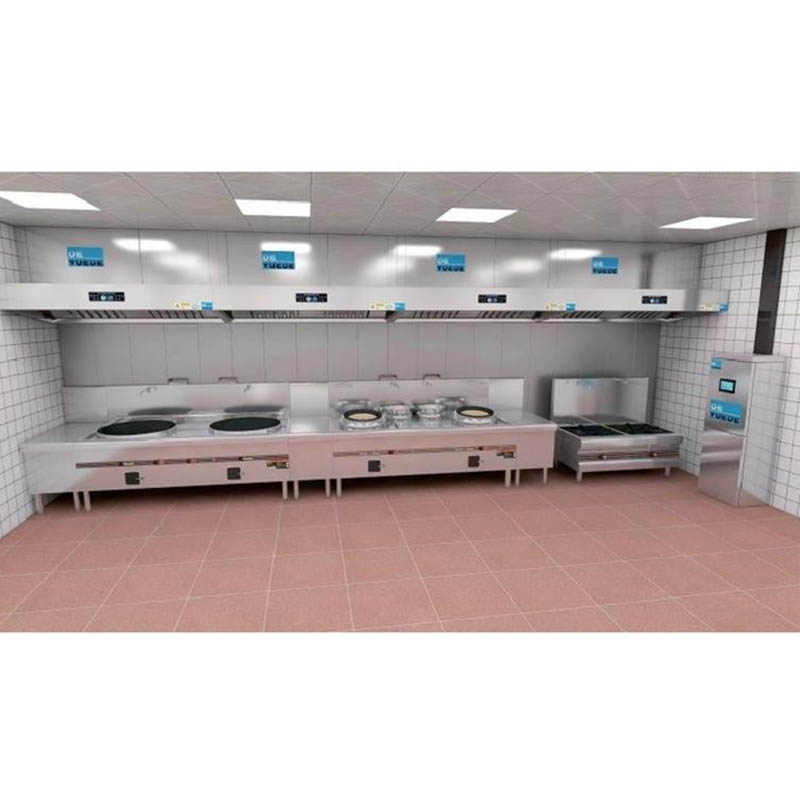
These are the classic workhorses: a stainless steel canopy over the cooking line, baffle filters inside, and a fan or centralized exhaust fan pulling air outdoors. They are simple, robust, and easy to service, which is why they remain the default choice for many wok lines. Their performance depends almost entirely on size, airflow, and duct quality.
Integrated Purification Hoods
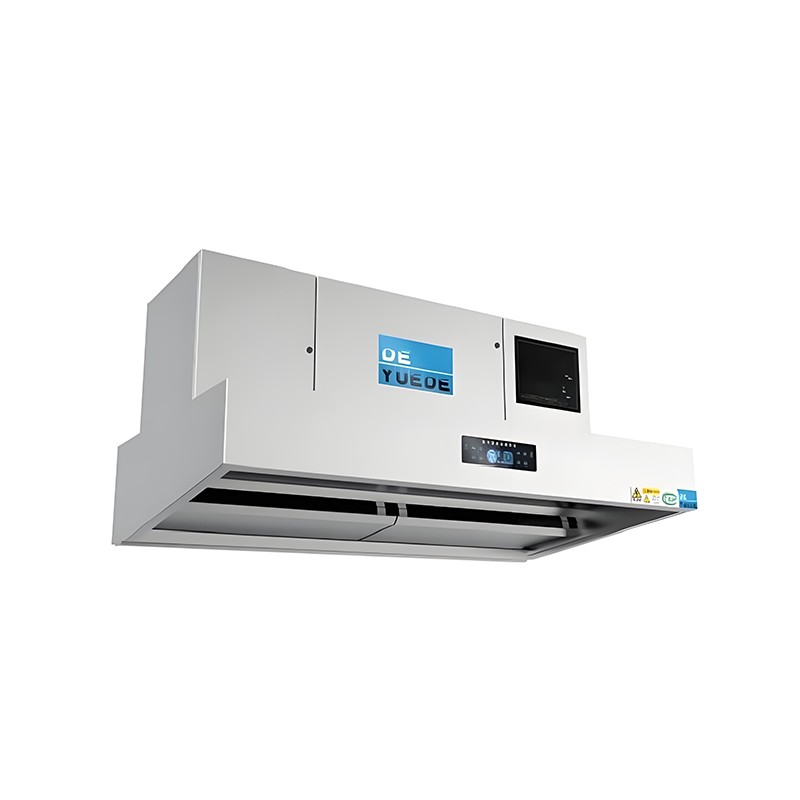
An integrated hood combines the canopy, the grease filtration, and the air purification stage in one factory-built unit. Instead of running a long duct to a rooftop electrostatic precipitator, the purification happens directly above the cooking surface. This shortens ducting, reduces pressure losses, and can simplify approvals where roof space is limited.
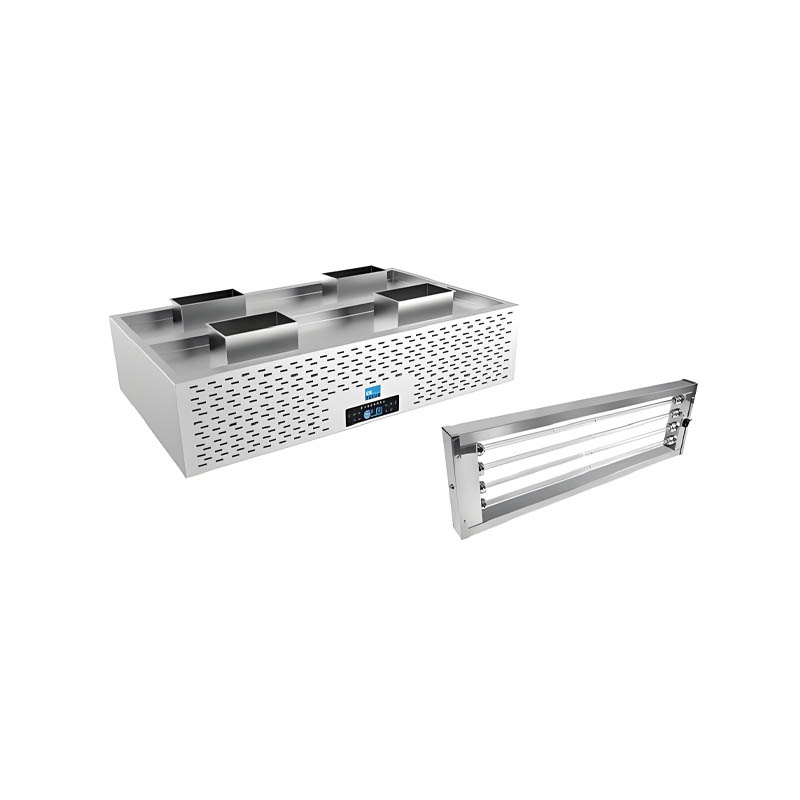
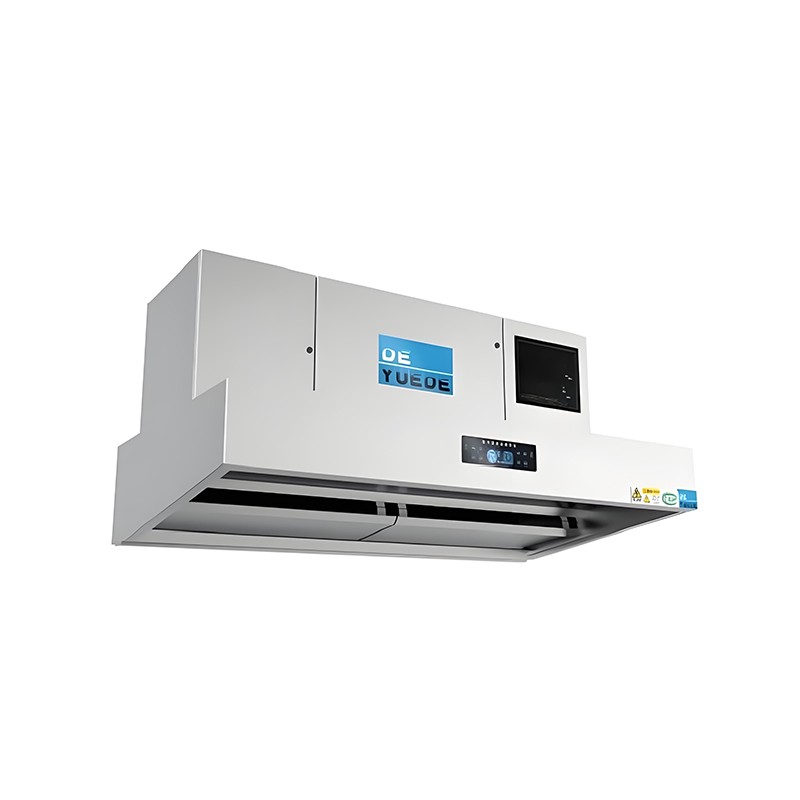 Commercial Kitchen Flat-Panel Integrated Fume Purification System for Steam Cooking EquipmSpecially designed for steam cooking equipment such as seafood steamers and rice steam cabinets.View Product →
Self-Cleaning and Automatic Washing Hoods
Grease is the enemy of long-term performance. Self-cleaning hoods use built-in spray or washing cycles to flush oil from the internal surfaces on a schedule, which keeps airflow stable and dramatically reduces manual scrubbing. For kitchens running two or three shifts, the labor savings alone often justify the upgrade. You can read more about how an automatic washing range hood is structured and maintained.
UV Range Hoods
UV modules are added downstream of the grease filters to break down odor and grease molecules through photolysis. They are especially useful in dense urban locations where exhaust is discharged near residential buildings and odor complaints are a real risk.
Exhaust Cabinets and Down-Draft Units
Sloped smoke extraction cabinets are a good fit for teppanyaki, grills, and open show kitchens where the chef works in front of guests and the hood must stay visually lightweight while still capturing heavy smoke.
Filtration: Baffle Filters Versus Electrostatic Precipitators
Baffle filters are the first line of defense. Their curved channels force grease-laden air to change direction, so oil droplets hit the metal and drain away instead of traveling into the duct. They are durable, dishwasher-friendly, and required by many fire codes.
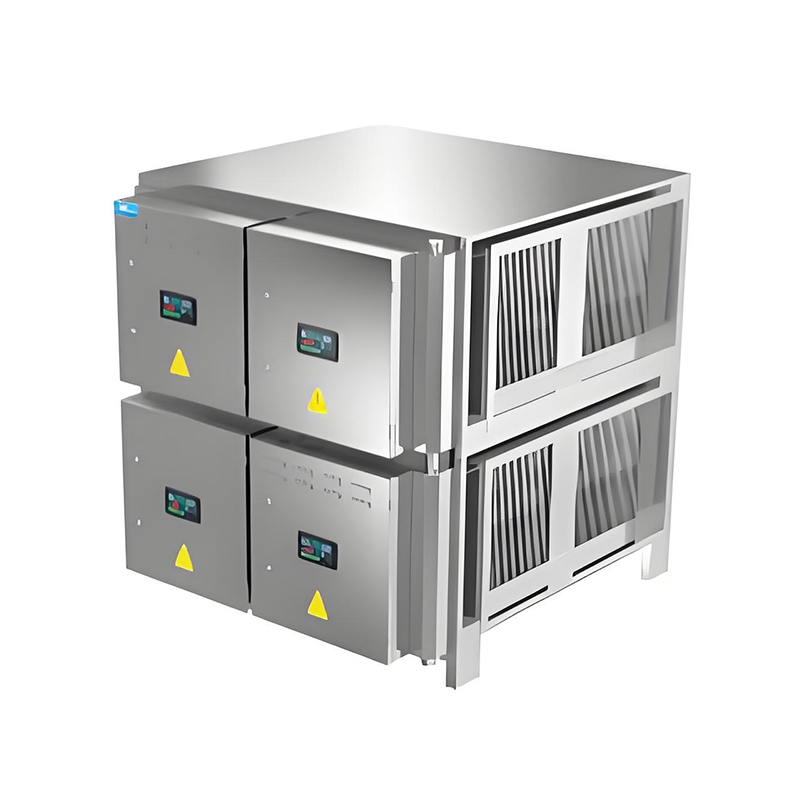
Baffle filters alone, however, do not capture fine aerosol or odor. That is where electrostatic precipitation comes in. Air passes through an ionizing field, particles receive a charge, and collection plates attract them. In practice, staged systems work best: baffles remove the bulk grease, then an electrostatic stage polishes the air, and a final stage handles odor if needed.
High-efficiency purification is achievable when the stages are properly matched. A large commercial purifier rated at 98 percent efficiency, for example, only delivers that number when airflow, plate spacing, and cleaning cycles are all correct.
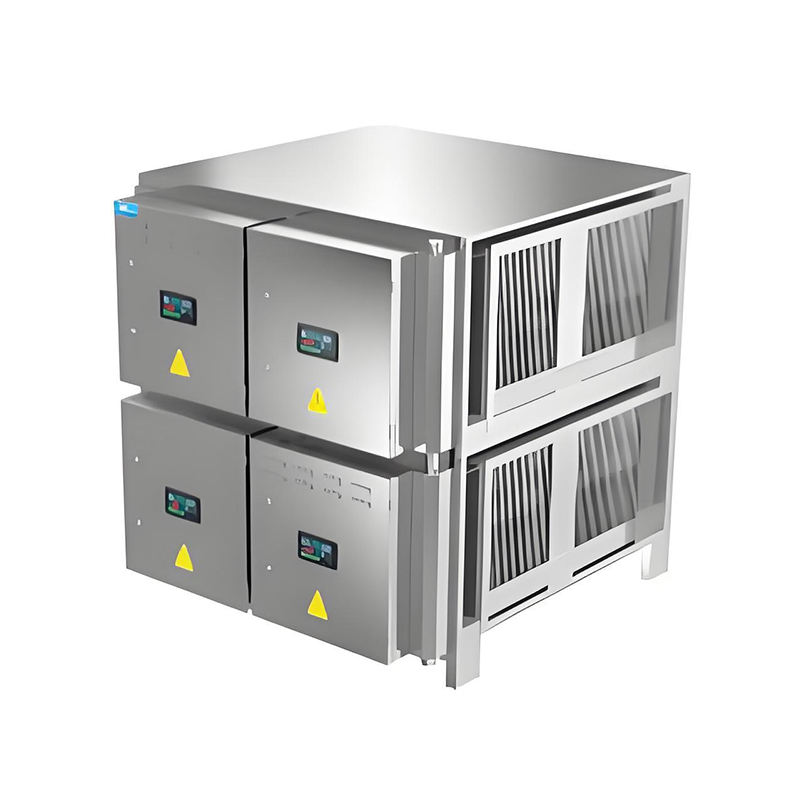 Commercial Kitchen Fume Purifier with Up to 98% Purification EfficiencyTechnical Description: This high-performance system features a 201 stainless steel housing, an electrostatic field, a digital power supply, and a high-voltage output s...View Product →
Ducting, Fans, and Makeup Air
A hood cannot exhaust air that never enters the kitchen. Makeup air is the most commonly ignored part of Chinese range hood design, and it is the reason many systems perform beautifully on paper and poorly in reality.
- Keep duct runs as short and straight as possible; every elbow costs static pressure.
- Match the fan curve to the real duct pressure, not the catalog free-air rating.
- Provide tempered makeup air close to the cooking line so the hood is not starved.
- Balance the system after installation and record the measured airflow for future reference.
Sizing the exhaust fan is a system decision, not a component decision. A fan that is too small leaves smoke in the room; one that is oversized wastes energy and can pull air backward through doors and corridors.
Smart Cleaning and Energy Control
Modern commercial kitchens increasingly rely on controls rather than brute force. Demand-controlled ventilation adjusts fan speed based on real cooking activity, optical or temperature sensors detect when a wok line is idle, and the system ramps down automatically. On a busy day the savings are modest; across a whole year of service, they are substantial—an energy-saving kitchen exhaust system can cut a meaningful share of the ventilation energy bill.
The same control platform can manage automatic washing cycles, monitor filter loading, and send maintenance alerts before airflow drops below the required threshold. For multi-unit groups, this turns scattered equipment into one manageable system.
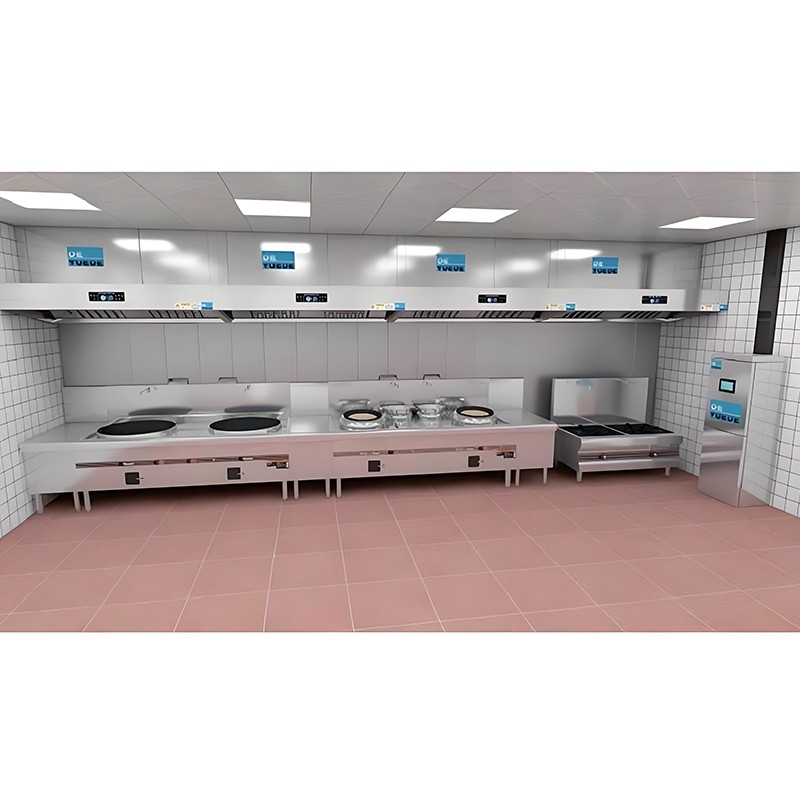 Commercial Kitchen Dual-Module Intelligent Self-Cleaning Integrated SystemNo disassembly required for cleaningView Product →
A Practical Maintenance Routine
- Empty grease cups daily during heavy service; never let them overflow.
- Inspect baffle filters weekly and deep clean them on a fixed schedule.
- Check electrostatic cells and wash them according to the manufacturer's interval.
- Verify airflow at the hood face at least twice a year.
- Inspect fan blades and ducts for grease buildup; it is a fire risk, not just an efficiency issue.
- Keep a log of cleaning dates, so compliance inspectors and service technicians can see the history.
Frequently Asked Questions
How much airflow does a wok line need?
There is no single number. Required airflow scales with hood length, the number of burners, the cooking style, and local code. The safest method is to have a mechanical engineer calculate the exhaust rate for your specific line, then add margin for filter loading between cleanings.
Can a ductless hood work in a Chinese restaurant kitchen?
Recirculating hoods are practical for light-duty cooking in small spaces, but they cannot handle the grease and smoke volume of a serious wok line. For commercial Chinese cooking, ducted exhaust with proper grease and odor control remains the standard.
How do I reduce grease buildup inside the duct?
Use multi-stage filtration. High-quality baffles remove most of the grease, and an electrostatic or UV stage captures the fine aerosol that would otherwise coat the duct walls. Combine that with a regular cleaning schedule and monitored airflow.
Is automatic washing worth the extra cost?
If the kitchen runs long shifts and labor is tight, yes. Automatic washing keeps internal surfaces cleaner, stabilizes airflow, and cuts the downtime needed for manual cleaning. For a single small kitchen with light use, manual cleaning may still be sufficient.
Choosing a Chinese range hood is really a system design exercise. Decide how much smoke you must capture at peak, how much grease you must intercept, how much odor you must neutralize, and how the air will be replaced and cleaned. Get those four answers right, and the hood itself becomes a straightforward selection. Get them wrong, and no amount of stainless steel polish will save the air in the dining room.
- No. 505 Lanshang Road, Xinwan Street, Qiantang New District, Hangzhou City, Zhejiang Province
- +86-(0)571-56682212
- [email protected]
Copyright @ Zhejiang Yuede Environmental Protection Technology Co., Ltd. All rights reserved Customized Commercial Kitchen Exhaust System Solution
