 English
 عربى

Industry News
Home / News / Industry News / Range Hood Height Above a Gas Cooktop: The Complete Installation Guide

Range Hood Height Above a Gas Cooktop: The Complete Installation Guide
2026-09-14
Content
If you are installing a range hood above a gas cooktop, one of the first questions you will face is how high the hood should be mounted. It may look like a small detail, but the mounting height has a direct effect on how well smoke, grease, and cooking odors stay out of your kitchen. Our team has spent years engineering ventilation systems for commercial kitchens, from compact cafe lines to large institutional cooking facilities, and the same physical principles apply at every scale. Get the height right, and your hood works with you. Get it wrong, and even the most expensive unit will underperform.
Standard Height Recommendations for Gas Cooktops
The generally accepted mounting height for a range hood above a gas cooktop is 24 to 30 inches. This distance is measured from the cooking surface, meaning the top of the burner grate, to the lowest edge of the hood. Most manufacturers list this same range in their installation manuals, and it represents the balance between effective smoke capture and safe heat clearance.
For gas ranges with higher BTU burners, often called pro-style or professional-style ranges, many manufacturers suggest a slightly higher mounting position of 28 to 36 inches. The extra clearance helps protect the hood's filters and electrical components from intense heat, while the hood's higher airflow capacity compensates for the added distance.
| Cooking surface | Recommended height | Typical application |
|---|---|---|
| Standard gas cooktop | 24-30 inches | Home kitchens |
| High-BTU gas range | 28-36 inches | Pro-style ranges |
| Electric or induction cooktop | 20-24 inches | Home kitchens |
| Outdoor gas cooktop | 36-42 inches | Outdoor kitchens |
Why Mounting Height Matters
The bottom edge of a range hood defines the start of its capture zone. When the hood is mounted too high, the thermal plume of hot air, steam, and smoke spreads outward before it reaches the filters, allowing grease particles and odors to escape into the kitchen. When the hood is mounted too low, it can obstruct the cook's view, create a head hazard, and expose the hood to unnecessary heat.
Manufacturers set minimum clearances for good reason. Gas flames produce radiant heat, and the electronics, motors, and finish of a hood are designed to withstand a certain temperature range. A hood that sits too close to a powerful burner will age faster and may need repairs sooner than one installed at the correct height.
There is also a comfort factor. A hood that feels like it is always in the way will be used less, and a hood that is turned off because it is annoying to cook under provides no benefit at all. The ideal height balances performance with practical daily use.
Factors That Can Shift the Ideal Height
The 24 to 30 inch range is a starting point, not a strict rule. Several factors can move the ideal height up or down for your specific setup.
BTU Output and Cooking Style
A standard home gas cooktop has burners rated between 5,000 and 15,000 BTU, while pro-style ranges can push 20,000 BTU or more per burner. Higher heat output creates a faster, wider rising plume, which means the hood needs either a higher mounting position with stronger airflow or a lower position with a well-matched capture panel. If you regularly use a wok or sear at high heat, pay extra attention to the CFM rating of the hood blower, because height alone cannot solve an airflow shortage.
Hood Type and Capture Area
Different hood styles tolerate different mounting heights. Wall-mounted chimney hoods with deep capture panels can handle a slightly higher installation because their large vertical surface helps guide the smoke upward. Island hoods are often mounted higher for visual reasons, but they require a more powerful blower to compensate for the open sides. Under-cabinet hoods have smaller capture areas and should therefore sit at the lower end of the recommended range. Ductless hoods, which recirculate air through charcoal filters, also need to be mounted closer to the cooking surface because their capture power is more limited.
The width of the hood matters too. A hood that is at least as wide as the cooktop, and ideally 6 inches wider, gives you more flexibility with the mounting height because the capture area is simply larger.
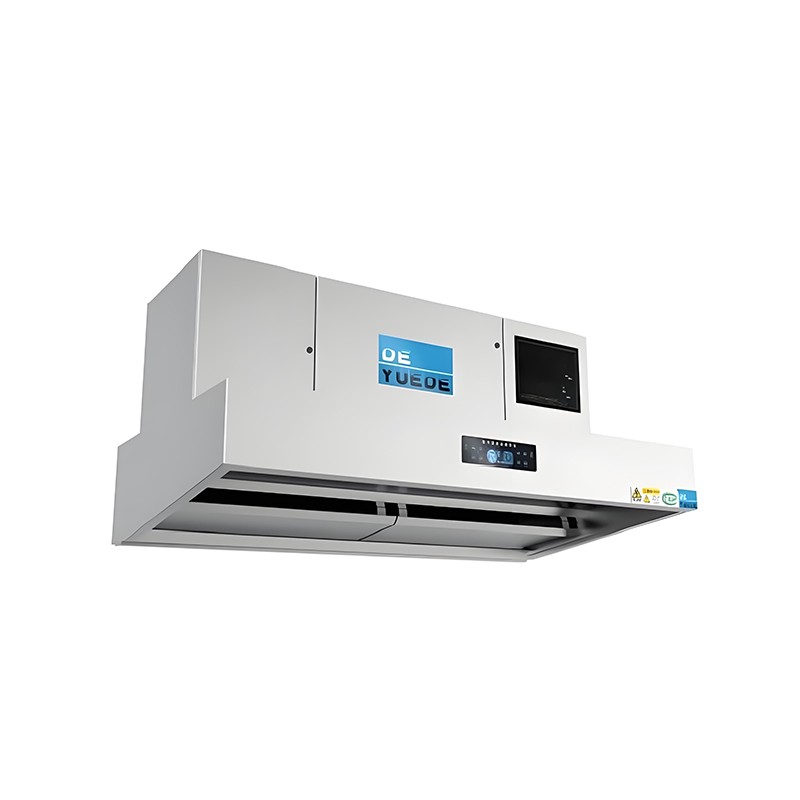
For open kitchen layouts, where the hood is often a design centerpiece, integrated purification machines offer a streamlined solution. These units combine the hood body, filtration stages, and blower in a single housing, which keeps the ceiling line clean and simplifies the overall ventilation layout.
 Integrated Fume Purification System for Open KitchensThis all-in-one unit combines hood, filtration, and blower in a flat-panel design suited for open or show kitchens, offering low-noise front-end purification and low-level discharge to maintain a clean dining environment.View Product →
Commercial Kitchens Operate Differently
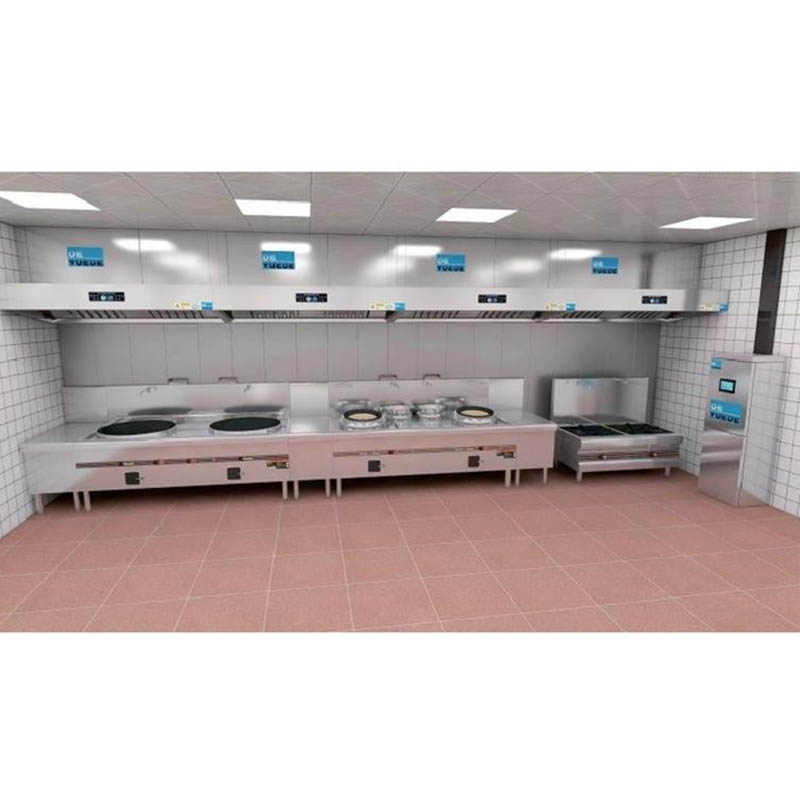
In commercial kitchens, the rules change. Professional hoods are typically mounted with the bottom edge about 6 feet 6 inches to 7 feet above the finished floor. Since commercial cooktops are usually 36 inches high, this works out to roughly 30 to 42 inches between the cooking surface and the hood. The greater height is practical because commercial cooking equipment produces far more heat, steam, and grease vapor, and commercial exhaust systems are sized with much higher airflow to keep the capture zone effective at that distance.
Commercial kitchen ventilation is also subject to codes and safety standards that residential kitchens are not. Local regulations may specify minimum clearances, required airflow rates, and fire suppression integration. If you are involved in a commercial kitchen project, we always recommend checking the local codes early in the design phase. You can find more detail in our commercial hood fan installation and safety guide.
Modern kitchen ventilation control systems can automatically adjust airflow to match cooking activity, which gives designers more flexibility when planning hood heights and duct layouts. This is especially useful in commercial kitchens where cooking loads vary throughout the day.
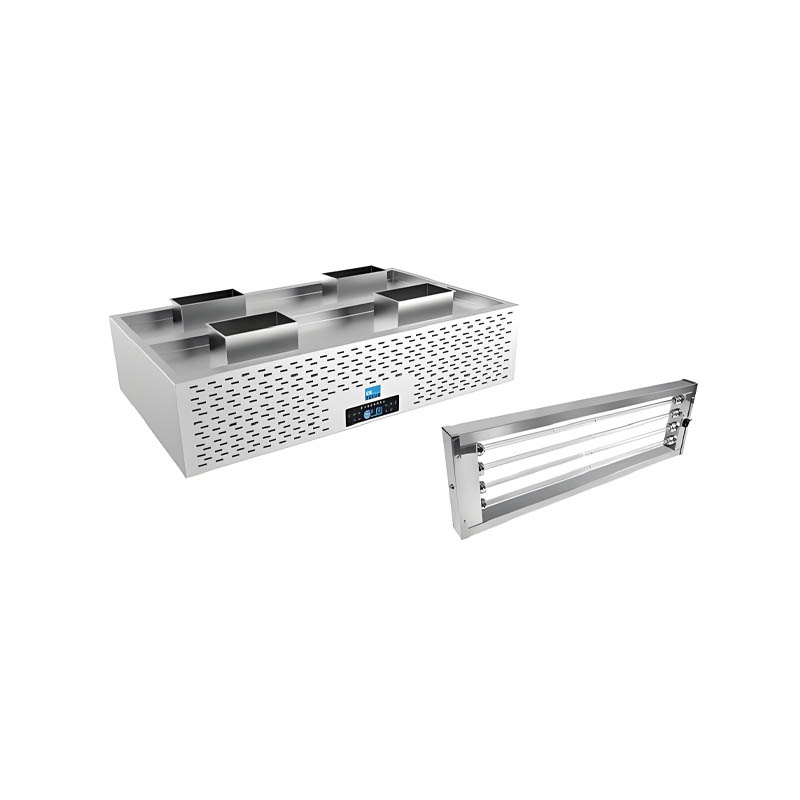
For commercial operations that run long hours, the reliability of the entire ventilation system matters as much as the mounting height. Our commercial kitchen plane oil fume purification integrated machine combines the hood, purification stages, and exhaust function into one unit, so the airflow path and capture geometry are engineered to work together from the start. That kind of integration removes much of the guesswork from height selection and duct design.
 Low-Profile Integrated Purification System for Steam EquipmentEngineered for steam cookers like seafood steamers and rice cabinets, this flat-panel system fits under 1.9-meter ceilings, uses dynamic capture and steam separation, and features six-stage electrostatic purification for demanding commercial kitchens.View Product →
Common Installation Mistakes to Avoid
After years of working with kitchen designers, contractors, and facility managers, we have seen the same mistakes come up again and again. Avoid these to get the most from your hood:
- Mounting the hood too high to fit a set of upper cabinets. The hood may look tidy, but it will struggle to capture smoke at that height.
- Installing a low-CFM hood at the top of the recommended height range. Without enough airflow, the smoke plume drifts away before reaching the filters.
- Ignoring the height of the person who cooks most often. A hood that forces a tall cook to duck is a daily annoyance.
- Choosing a hood that is narrower than the cooktop. Even at the perfect height, smoke escapes around the sides.
- Forgetting about duct resistance. Long duct runs, sharp bends, and undersized ductwork reduce effective airflow, making a hood less effective at higher mounting heights.
A Quick Checklist for Measuring and Adjusting
If you are preparing for installation or troubleshooting an existing setup, here is a practical checklist we share with customers:
- Measure from the top of the burner grate to the bottom edge of the hood's filter or capture panel. This is your real mounting height.
- Verify the measurement falls within the manufacturer's recommended range, typically 24 to 30 inches for gas cooktops.
- Make sure the hood is centered and level over the cooktop. Even a small tilt can direct smoke to one side.
- Check the space above the hood for duct routing and ensure the flue cover or chimney fits without obstruction.
- Perform a smoke test after installation. Simmer a pot on the farthest burner and hold a wisp of incense near the pan; the smoke should flow steadily into the hood.
If the smoke test reveals weak capture, do not rush to change the height. First, check the blower speed and clean or replace the filters. A clogged filter is one of the most common reasons a correctly mounted hood underperforms. Our dual-component integrated intelligent cleaning machine uses an automatic cleaning control system to keep the filtration stages clear, which is a practical answer for kitchens where manual filter maintenance often gets postponed.
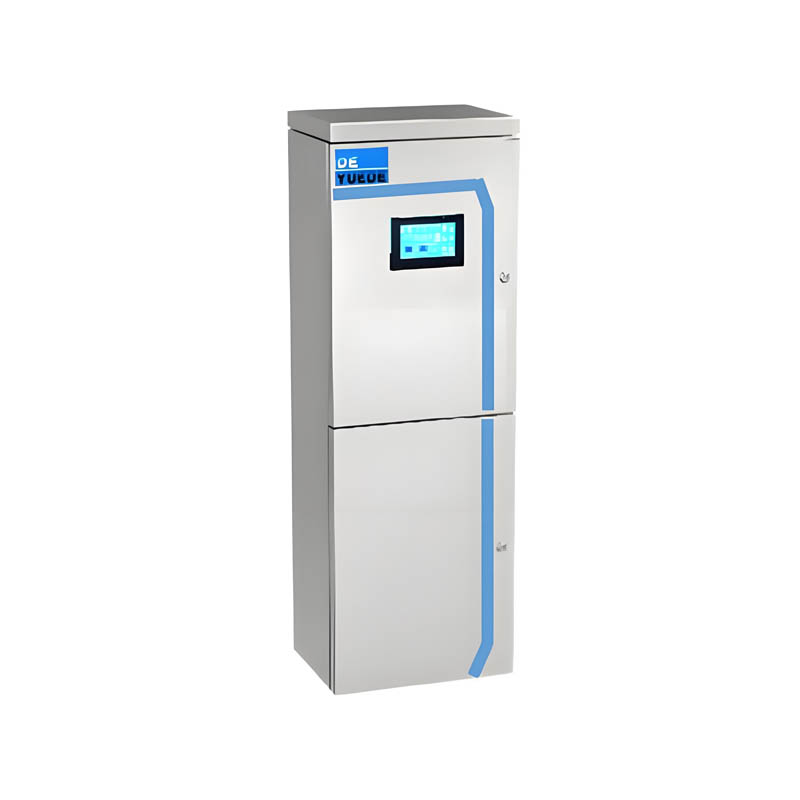 Dual-Unit Intelligent Self-Cleaning Integrated SystemThis system automates cleaning for up to six integrated hood units through a control cabinet that handles filling, heating, pressurizing, and spraying, reducing manual maintenance to once every one to three months and lowering operating costs.View Product →
Choosing the right height for a range hood above a gas cooktop comes down to understanding the relationship between heat output, airflow, and the physical layout of your kitchen. Start with the manufacturer's recommended range, then adjust for the cook's height, the strength of the burners, and the style of the hood. Do not overlook the supporting cast: adequate CFM, clean filters, and well-designed ductwork are just as important as the number on your tape measure.
Whether you are planning a single kitchen station or a full commercial ventilation system, a little upfront planning goes a long way. If you have questions about sizing, mounting heights, or system design, our team is happy to help. We build kitchen ventilation equipment for real cooking conditions, and we understand that a well-positioned hood makes all the difference in a kitchen that feels comfortable and stays clean.
- No. 505 Lanshang Road, Xinwan Street, Qiantang New District, Hangzhou City, Zhejiang Province
- +86-(0)571-56682212
- [email protected]
Copyright @ Zhejiang Yuede Environmental Protection Technology Co., Ltd. All rights reserved Customized Commercial Kitchen Exhaust System Solution
