 English
 عربى
عربى
Industry News
Home / News / Industry News / Do You Need a Range Hood with an Electric Stove? Yes, Especially in Commercial Kitchens

Do You Need a Range Hood with an Electric Stove? Yes, Especially in Commercial Kitchens
2026-08-05
Content
An electric cooktop looks like a small ventilation problem. There is no open flame, no gas line, and no visible combustion exhaust. Yet the question still shows up in every kitchen planning conversation: do you need a range hood with an electric stove? The short answer is yes. A range hood is not only for gas cooking. It captures the grease vapor, steam, smoke, and fine particles that cooking produces, and in a commercial kitchen, it is usually required by code.
The Short Answer: Yes, with a Code Caveat
For a residential kitchen, most building codes do not legally require a vent hood above an electric stove. Many codes require some form of kitchen ventilation, such as a window or an exhaust fan, but they do not always require a dedicated range hood. That distinction does not change the practical answer. A window only works when it is open, and a basic exhaust fan does not remove grease-laden air as effectively as a hood placed directly over the cooktop.
For a commercial kitchen, the legal answer is almost always yes. Health and fire inspectors expect a grease exhaust hood, the commercial version of a range hood, above equipment that produces grease-laden vapors, steam, or smoke. The appliance itself can be electric; the requirement is based on what cooking releases into the air. NFPA 96, the standard used to guide commercial cooking ventilation, sets the framework for hood design, duct cleaning, and grease removal. Equipment built for that setting also needs high filtration performance. A well-designed commercial kitchen fume purification system can make the difference between a kitchen that stays clean and one that fails an inspection.
In short, an electric stove does not eliminate the need for ventilation; it changes the ventilation requirement.
Why an Electric Stove Still Creates Kitchen Pollution
An electric stove does not produce carbon monoxide during normal operation, but cooking still creates pollutants. Heating oil pushes it past its smoke point and creates grease aerosol. Searing meat generates smoke and charred particles. Boiling water turns into steam. Together, these byproducts coat surfaces, raise humidity, and add fine particles to the air.
| Cooking activity | What it releases | How a range hood helps |
|---|---|---|
| Searing or grilling | Smoke, fine particles, grease vapor | Captures smoke before it stains surfaces or enters the breathing zone |
| Deep frying | Grease aerosol, strong odors | Removes airborne grease that collects on cabinets and hood parts |
| Boiling or steaming | High humidity, low-level odors | Moves steam out of the kitchen and reduces condensation |
| Wok cooking | Charred residue, fine oil mist | Pulls particles away from the cook and prevents a sticky film |
That grease film is not only a cosmetic problem. In a commercial kitchen, grease can build up in hoods and ducts and become a fire risk. In a home kitchen, it collects on cabinets, backsplashes, and ceilings. A range hood captures these byproducts at the source, which is why ventilation continues to matter even when the stove does not burn fuel.
Electric vs. Gas: What Changes and What Does Not
Gas stoves dominate the ventilation conversation because they release combustion gases, including carbon monoxide and nitrogen dioxide, into the room. An electric stove removes that concern. It does not remove heat, steam, grease, or fine particles, so the hood remains important for different reasons.
Combustion gases are no longer the main issue
With no fuel burning at the cooktop, you do not need to size a hood for combustion exhaust. That simplifies the airflow calculation. Start with the cooking load instead of the fuel source.
But grease, smoke, and steam still are
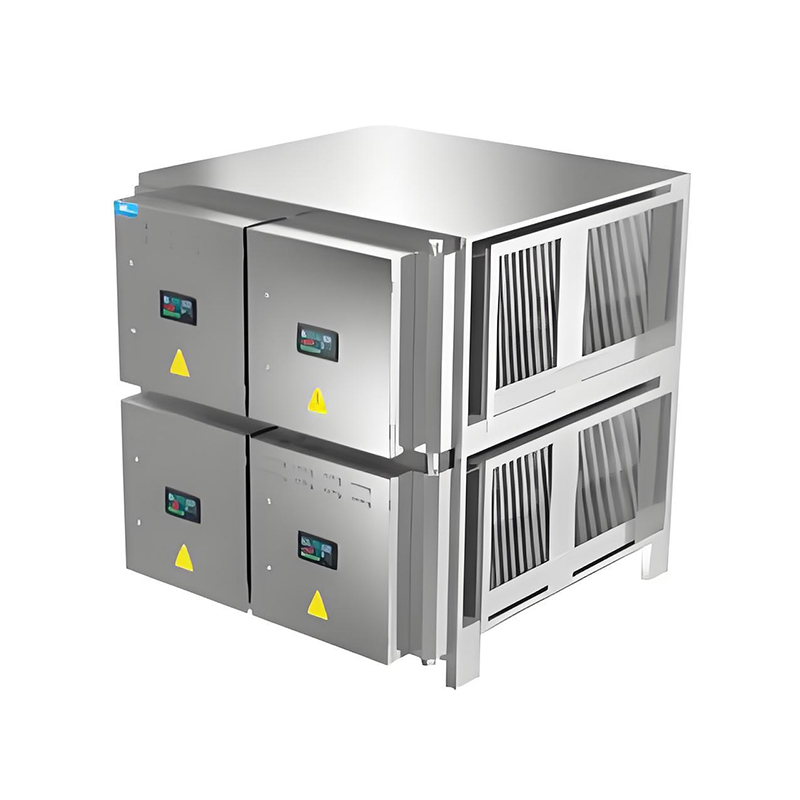
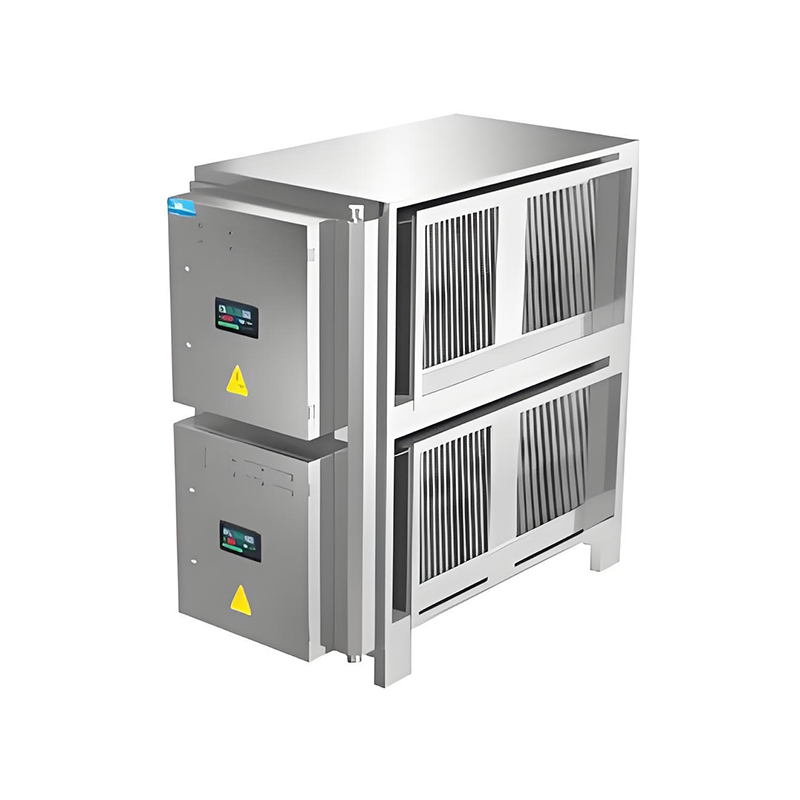
For a typical home electric cooktop, 200 to 400 CFM is a reasonable starting point. Frequent wok cooking, deep frying, or poor natural airflow pushes the number higher. In a commercial kitchen, required airflow is calculated from the cooking equipment and hood size, which is why a high-efficiency purifier is often the right choice. At that level, a large-scale commercial kitchen fume purifier with 98% purification efficiency provides both the airflow and filtration the space needs.
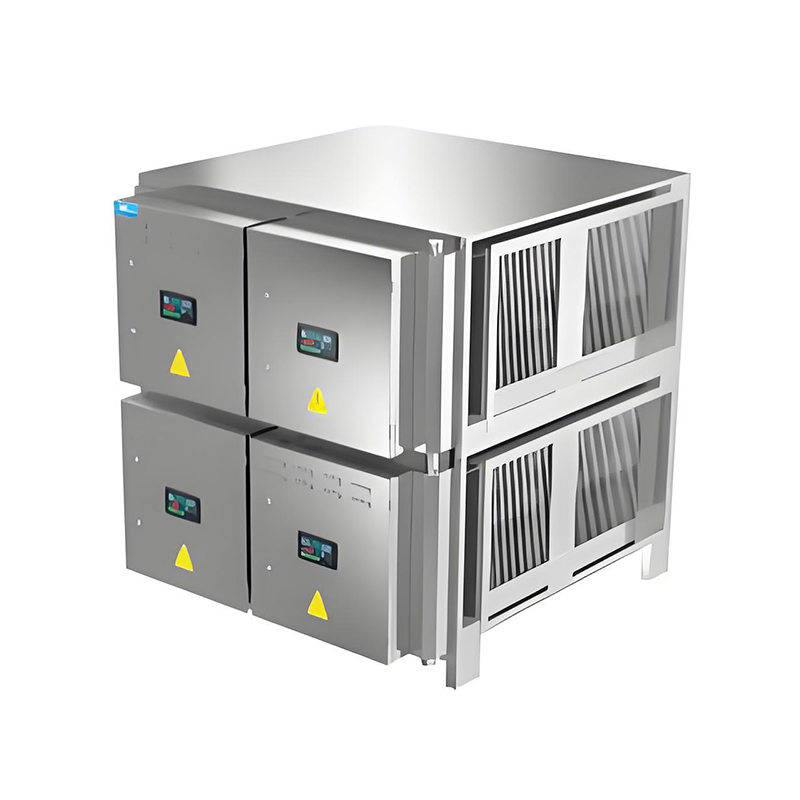 Commercial Kitchen Fume Purifier with Up to 98% Purification Efficiency SuppliZhejiang Yuede Environmental Protection Technology Co., Ltd. is Commercial Kitchen Fume Purifier with Up to 98% Purification Efficiency...View Product →
Choosing a Range Hood for an Electric Stove
Once you accept that ventilation is necessary, the selection process becomes practical. An electric stove changes the calculation, but not the process. Start with these details:
- Cooktop width and available wall or cabinet space
- Ducted or ductless installation
- Peak cooking output and typical cooking style
- Cleaning and filter maintenance expectations
Match the capture area to the cooktop
Measure the cooktop width. The hood should be at least as wide, and wider is better. A 30-inch electric cooktop should get a 30-inch or 36-inch hood. The more the hood extends past the cooking surface, the more likely it is to catch rising smoke before it reaches the room. Follow the manufacturer’s clearance guidance as well: the hood should sit high enough for large pots and low enough to keep rising smoke inside the capture zone.
Decide between ducted and ductless
Ducted hoods carry air, grease, and steam outdoors and are the most effective option. Ductless hoods use a charcoal filter and recirculate air back into the room; they are easier to install but less effective with steam and heat. In a residential kitchen, a ductless model can be acceptable. In a commercial kitchen, recirculating systems are rarely allowed where grease-laden vapors are present. An over-the-range microwave with a built-in fan is a common alternative, but it captures less of the rising plume than a dedicated hood.
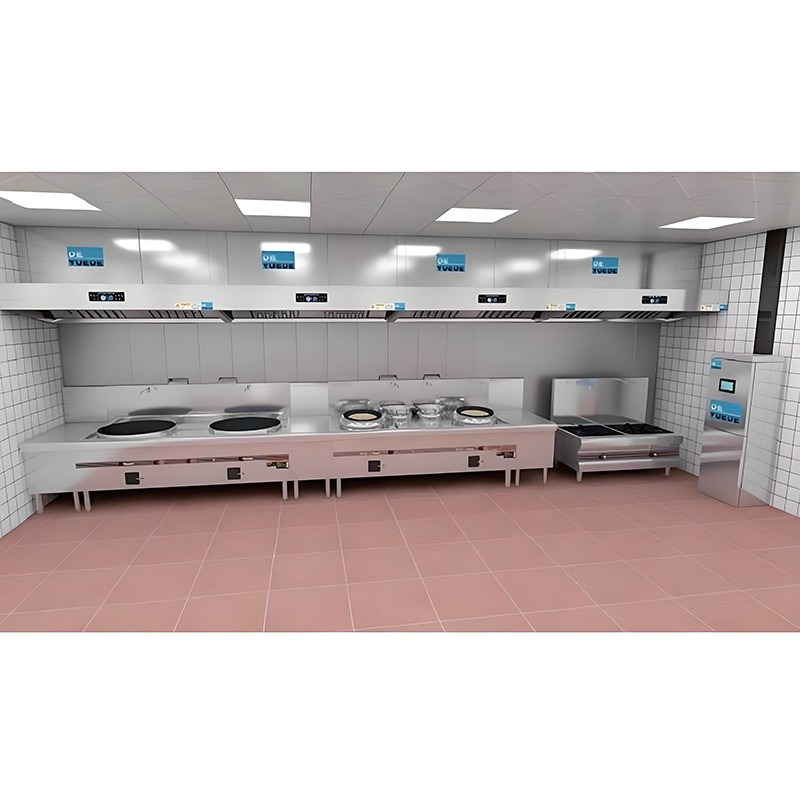
Match the system to the kitchen layout
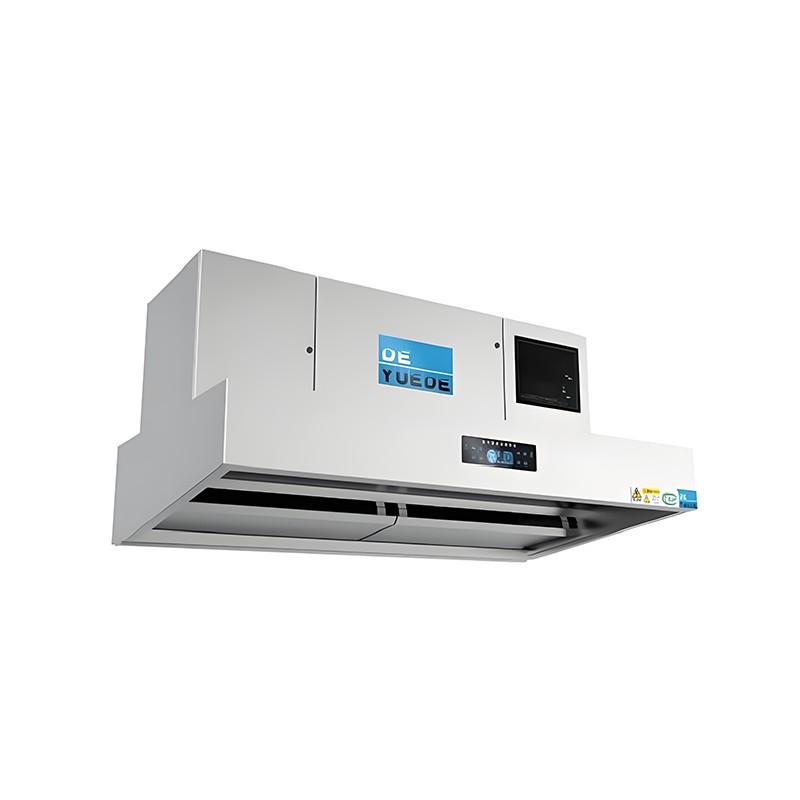
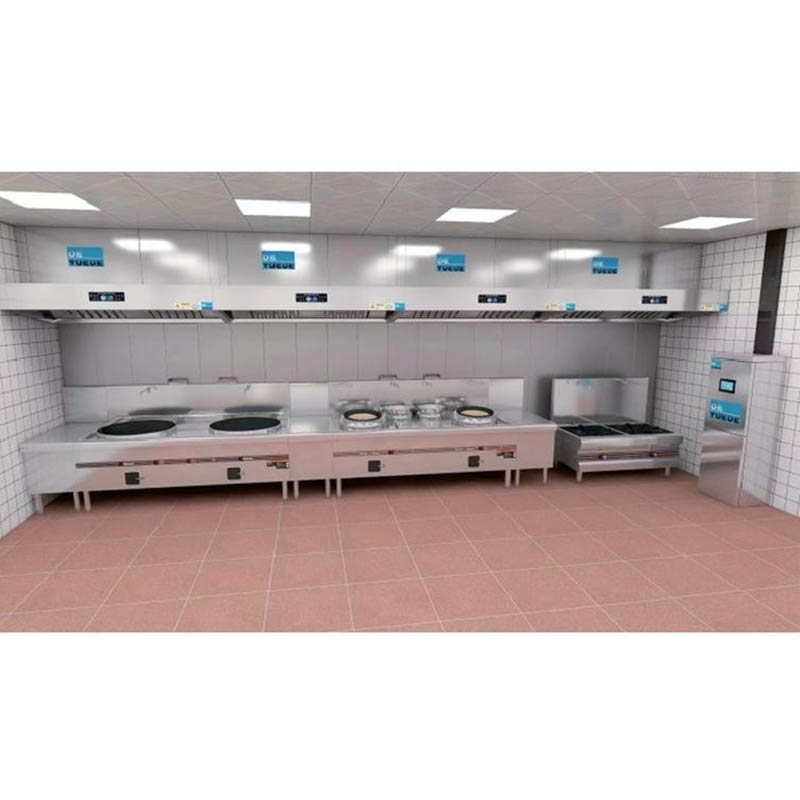
Space often decides the system. In a home kitchen, an under-cabinet hood may be the only choice. In a commercial kitchen, the hood is part of a larger ventilation assembly. Integrated units combine the capture canopy and the purification stage in one structure, which simplifies installation and upkeep. For example, a commercial kitchen oil fume purification integrated machine is built for kitchens where the canopy, filter, and exhaust have to work as one system.
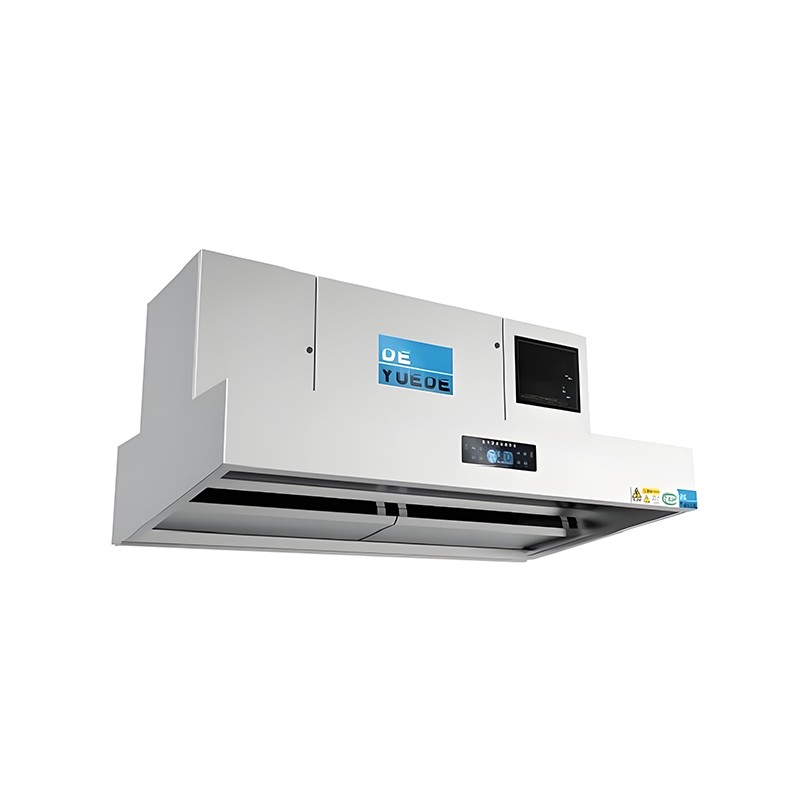 Flat Panel Integrated Hood Manufacturers, Flat Panel Kitchen Ventilation System Custom Flat Panel Kitchen Ventilation System Solution - Yuede is Flat Panel Integrated Hood Manufacturers and Commercial Kitchen Flat Pan...View Product →
Check filters and cleaning features
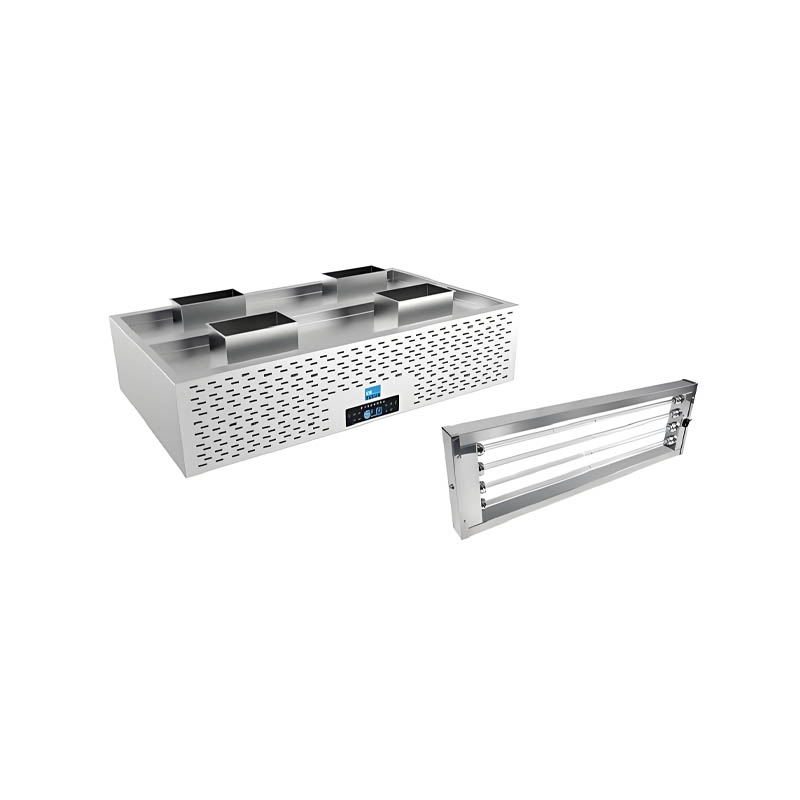
The filter matters as much as the fan. Baffle filters separate grease from air more reliably than simple mesh filters under heavy cooking loads. Self-cleaning systems shorten maintenance time and keep performance more consistent. In a busy kitchen, a dual-component integrated intelligent cleaning machine with an intelligent cleaning control system can manage grease buildup continuously instead of waiting for manual cleaning.
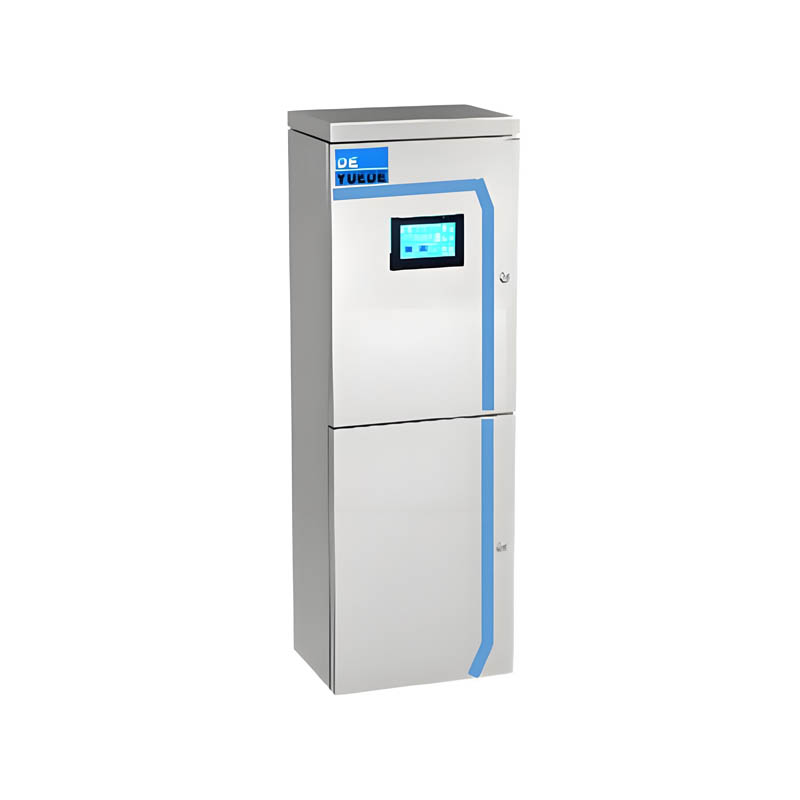 Dual-Unit Integrated Intelligent Cleaning System Suppliers, Factory - Zhejiang YZhejiang Yuede Environmental Protection Technology Co., Ltd. is Dual-Unit Integrated Intelligent Cleaning System Suppliers and Factory in...View Product →
Use controls to balance comfort and energy
Cooking loads change from meal to meal. A hood with variable speed controls lets you run low for simmering and high for searing. Intelligent controls can link the hood to stove operation or adjust airflow automatically to match the conditions. This affects energy use as much as air quality. Well-designed systems remove smoke when needed and save power when they can, which is why intelligent smoke extraction systems that cut kitchen energy are useful in both homes and commercial kitchens.
The Bottom Line
Household codes may not require a range hood over an electric stove, but the equipment still protects your kitchen in ways that a window or a basic fan cannot. A commercial kitchen with electric equipment needs a compliant exhaust hood in most cases, and the ventilation system has to handle grease, smoke, and steam rather than combustion gas. Size the hood to the cooktop, choose a ducted system whenever possible, and match the cleaning capability to how often the kitchen cooks. That approach turns the question from “do you need one” into “how well does the one you choose work.”
- No. 505 Lanshang Road, Xinwan Street, Qiantang New District, Hangzhou City, Zhejiang Province
- +86-(0)571-56682212
- [email protected]
Copyright @ Zhejiang Yuede Environmental Protection Technology Co., Ltd. All rights reserved Customized Commercial Kitchen Exhaust System Solution
