 English
 عربى
عربى
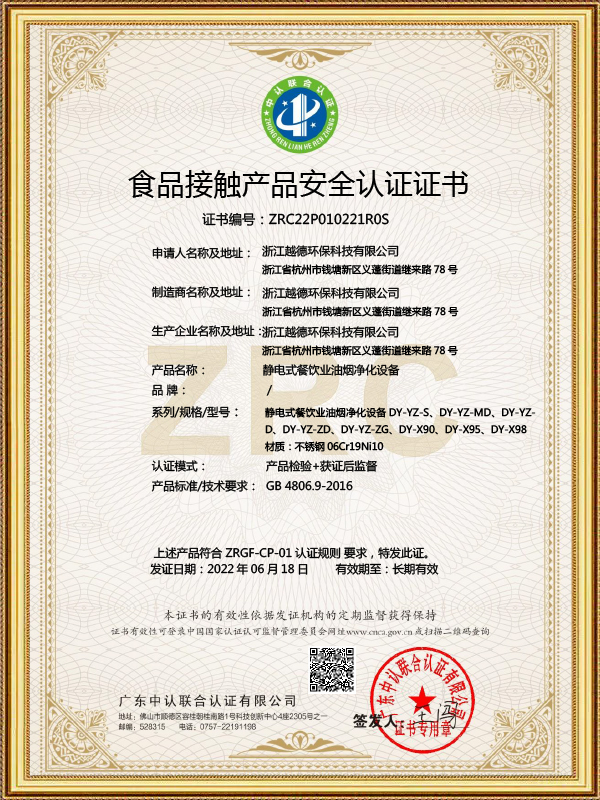
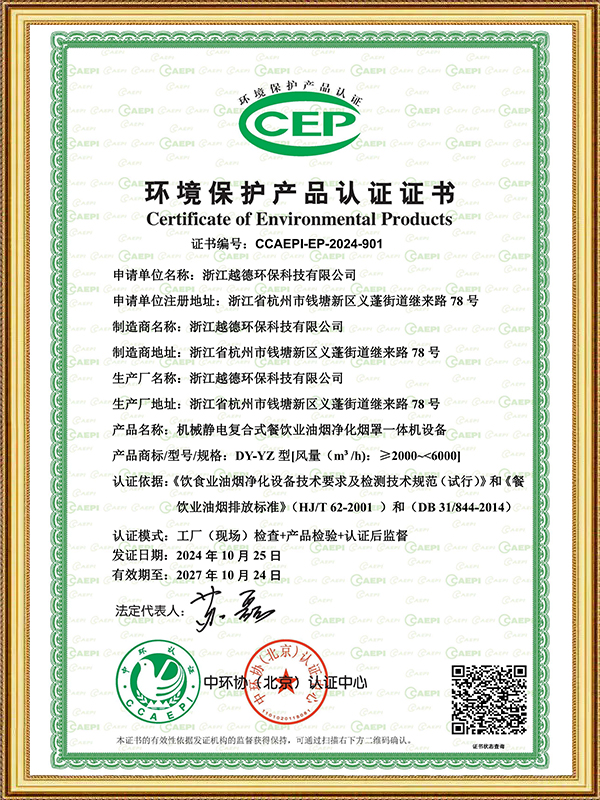
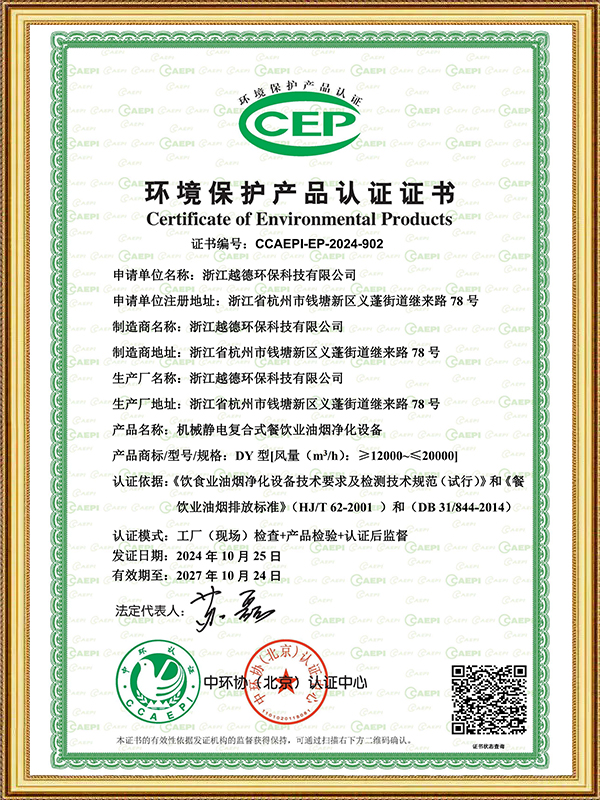
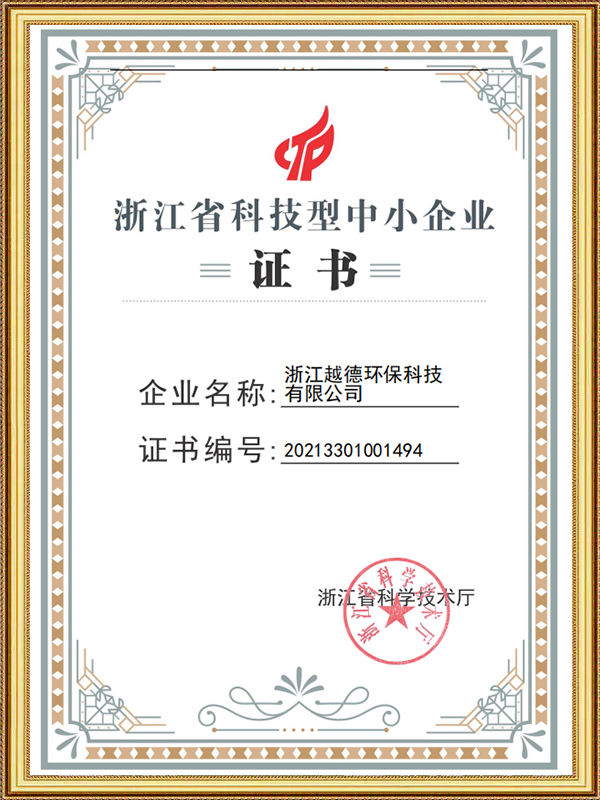
Zhejiang Yuede Environmental Protection Technology Co., Ltd. is located at 505 Lanshang Road, Xinwan Street, Qiantang District, Hangzhou City.
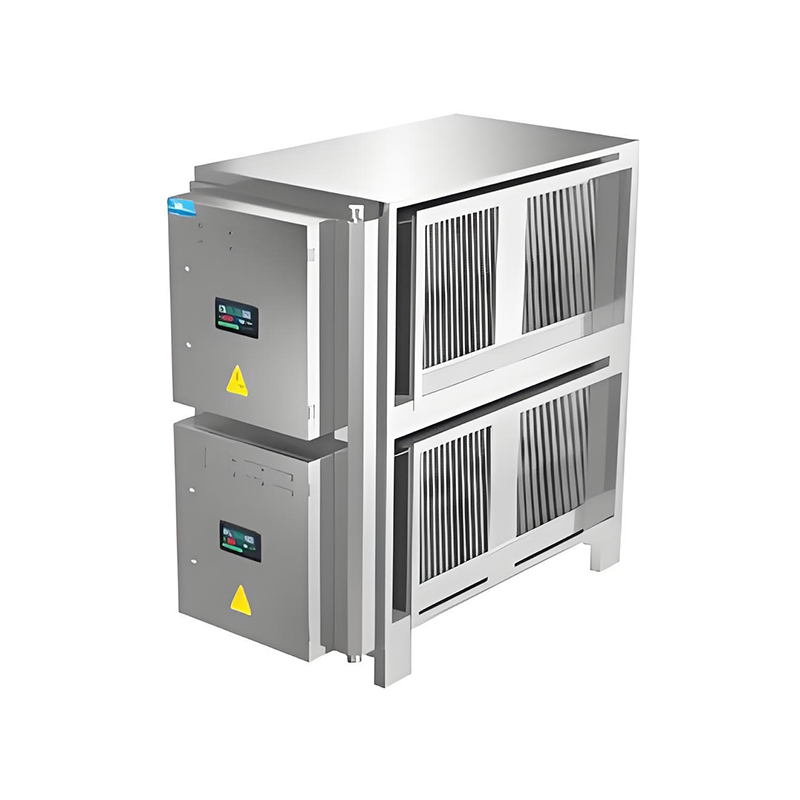
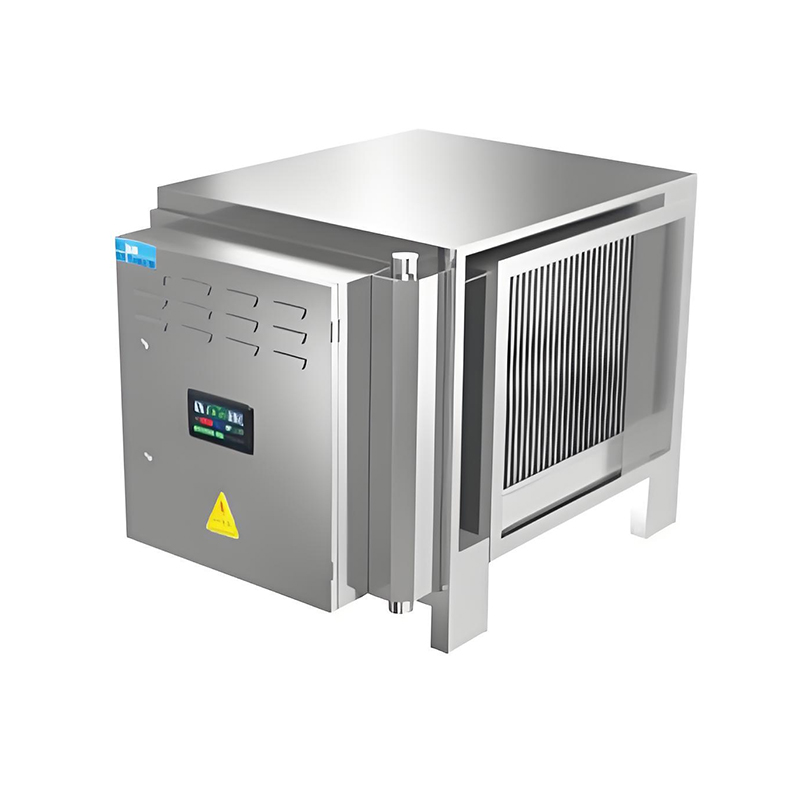
The company is mainly engaged in the research, development, production, and sales of oil fume purification and exhaust equipment, and is one of the few manufacturers in the industry with the ability to develop electronic software systems and design sheet metal structures.
The products specifically include oil fume purifiers, oil fume purification all-in-one machines, intelligent cleaning all-in-one machines, fans, fresh air cooling fans, and intelligent smoke exhaust systems.
Since 2020, the company has accumulated 2 invention patents and 31 utility model patents. Among them, the practical patent - the splicing technology of all-in-one machines has been adopted by more than 80% of peers; The patents related to intelligent cleaning and intelligent smoke exhaust systems are breakthrough or leading technologies in the industry. Traditional product companies such as oil fume purifiers and fans have optimized their structure and process to achieve better results and higher grades.

Products
Home / Products
Products & Solutions
CONTACT US
-

+86-(0)571-56682212
-

-

No. 505 Lanshang Road, Xinwan Street, Qiantang New District, Hangzhou City, Zhejiang Province
Products
About Us
Zhejiang Yuede Environmental Protection Technology Co., Ltd.

Message Feedback
Products Industry knowledge
Industry Knowledge
Calculating Exhaust Airflow and Makeup Air Balance
At Zhejiang Yuede, we often see kitchens where the exhaust hood is powerful but the room still feels stuffy or drafty near the doors — the real culprit is usually an imbalanced makeup air ratio rather than a weak fan. As a rule of thumb, a wall-mounted canopy hood over a heavy-duty cooking line typically needs 300–400 CFM per linear foot of hood length, while an island hood open on all sides needs closer to 400–500 CFM per linear foot because there's no wall to help contain the thermal plume. If makeup air supply is set below roughly 80% of exhaust volume, the kitchen runs under negative pressure, which pulls in unconditioned air through door gaps and can even cause gas appliances to backdraft.
A practical way to check balance without expensive instrumentation is the door-swing test: with all exhaust and supply fans running, a door leading outside should open and close with only slight resistance. If it slams shut or is hard to pull open, the makeup air fan needs adjustment. For kitchens with a Smart Kitchen Ventilation System, this balancing can be automated — pressure sensors compare supply and exhaust readings in real time and modulate the makeup air damper accordingly, which removes the guesswork that manual balancing usually involves.
- Wall canopy hoods: 300–400 CFM per linear foot
- Island canopy hoods: 400–500 CFM per linear foot
- Recommended makeup air ratio: 80%–90% of total exhaust volume
- Duct velocity target: 1,500–2,000 feet per minute to keep grease particles suspended and moving toward the collector rather than settling in the ductwork
Grease Filtration Stages and Realistic Maintenance Cycles
Single-stage baffle filters alone rarely satisfy modern fire codes or odor requirements in a busy restaurant, which is why most oil fume purification lines now combine mechanical, electrostatic, and activated carbon stages. Each stage targets a different particle size range, and understanding this breakdown helps operators set realistic cleaning schedules instead of guessing.
| Filtration Stage | Particle Size Targeted | Typical Cleaning Interval |
|---|---|---|
| Baffle / mesh pre-filter | Above 10 microns | Weekly to bi-weekly |
| Electrostatic precipitator | 0.3–10 microns | Monthly |
| Activated carbon module | Odor / VOC absorption | Every 3–6 months, replacement not just cleaning |
Skipping the electrostatic stage cleaning is the single most common cause of purification efficiency dropping from over 90% down to under 60% within a few months, because a saturated collector plate can no longer hold a charge strong enough to attract fine particulate. For any operation marketed as a Restaurant Smoke Control System, we at Yuede recommend logging cleaning dates on each unit rather than relying on visual inspection alone, since oil residue can look clean on the surface while the plates underneath are already saturated.
Noise and Vibration Control When Selecting Kitchen Fans
Fan noise complaints are almost never about the fan itself being "loud" — they're about resonance transmitted through the mounting structure and ductwork. A centrifugal fan rated at 65 dB in isolation can easily register above 75 dB inside a kitchen if it's bolted directly to sheet metal ducting without vibration isolators, because the duct acts like a speaker cabinet amplifying low-frequency hum.
Three adjustments that reduce perceived noise without changing airflow
- Neoprene or spring isolators between the fan housing and roof curb or wall bracket
- Flexible canvas connectors at the fan inlet/outlet to break the direct metal-to-metal vibration path
- Choosing a fan sized to run at a lower RPM with a larger wheel diameter rather than a smaller wheel spinning faster for the same CFM — this alone can cut tonal noise by several decibels
In coastal or high-humidity regions, belt-drive fans generally outlast direct-drive units because the motor sits outside the airstream and isn't exposed to grease-laden moist air; this is one reason our fan lineup at Zhejiang Yuede leans toward belt-drive configurations for continuous heavy-duty service, even though direct-drive units cost less upfront.
Where Automated Cleaning and Remote Monitoring Actually Save Labor
Manual grease trap and duct cleaning is one of the highest-risk, lowest-morale tasks assigned to kitchen staff, and it's also the task most often skipped when a shift gets busy. Intelligent cleaning modules address this by running scheduled hot-water and detergent cycles automatically overnight, timed to hood usage sensors rather than a fixed calendar — a kitchen that runs a heavy fryer line six days a week accumulates grease faster than one running light sauté service, so a fixed weekly schedule either over-cleans or under-cleans depending on actual load.
Remote monitoring adds a second layer: differential pressure sensors across the filter bank flag when airflow resistance climbs past a threshold, which is a far more reliable trigger for maintenance than a calendar reminder. This is the core function behind our intelligent smoke exhaust systems, which push alerts to a manager's phone when a filter stage needs attention rather than waiting for a slow, visible smoke buildup that guests notice first.
- Usage-based cleaning cycles reduce detergent and water consumption compared to fixed schedules
- Differential pressure alerts typically catch filter saturation 1–2 weeks before airflow drops noticeably
- Centralized dashboards let a multi-location operator compare purification efficiency across sites instead of relying on each site manager's individual habits
- No. 505 Lanshang Road, Xinwan Street, Qiantang New District, Hangzhou City, Zhejiang Province
- +86-(0)571-56682212
- [email protected]
Copyright @ Zhejiang Yuede Environmental Protection Technology Co., Ltd. All rights reserved Customized Commercial Kitchen Exhaust System Solution
